80-Year-Old Deaf Man Went to Bank for a Fixed Deposit, Was Sold Insurance Instead: Wins Rs 2.47 Lakh
Mis-selling

80-Year-Old Deaf Man Went to Bank for a Fixed Deposit, Was Sold Insurance Instead: Wins Rs 2.47 Lakh

Legal Team14 July 20265 min read

When a Bank Turns a Fixed Deposit into an Insurance Trap

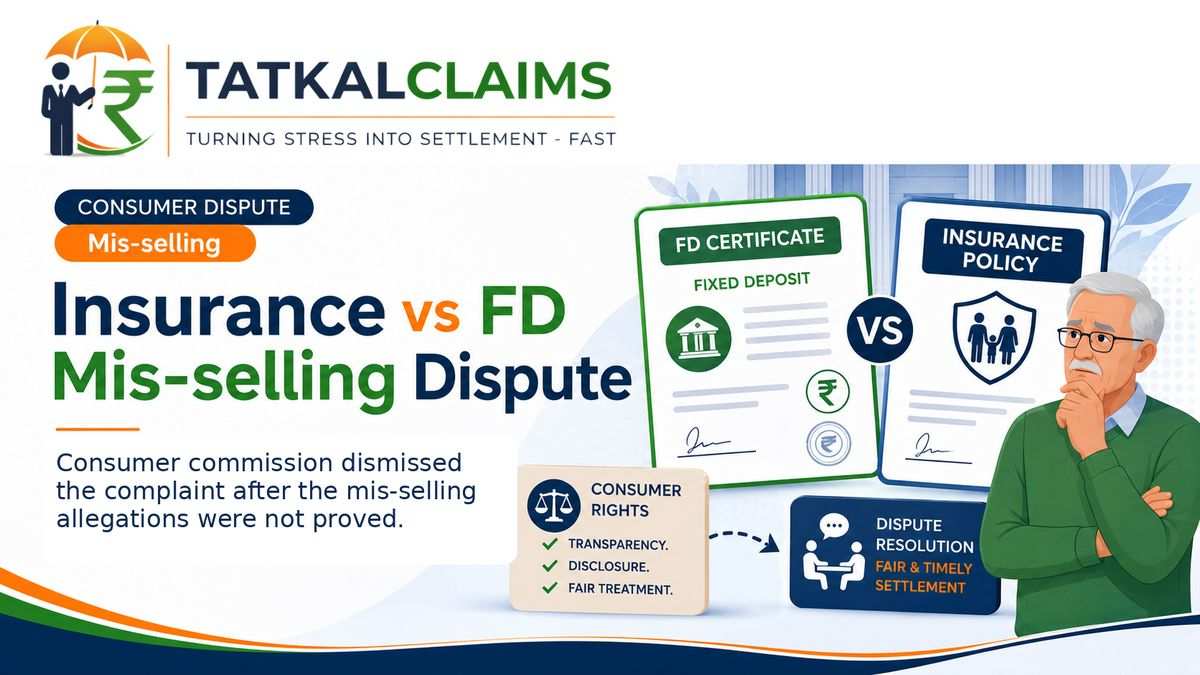
In December 2014, an 80-year-old man with complete hearing loss walked into an Axis Bank branch in Kanker, Chhattisgarh. He wanted one thing: to invest his hard-earned savings of Rs 3 lakh in a senior citizen fixed deposit. What he got instead was a life insurance policy he never asked for, never understood, and certainly never needed.

More than a decade later, the Uttar Bastar-Kanker District Consumer Disputes Redressal Commission has delivered justice. The commission has ordered Axis Bank and Max Life Insurance Company to jointly refund the balance amount of Rs 1,77,615.24 with 12 percent annual interest, plus Rs 50,000 compensation for mental agony and Rs 20,000 towards litigation costs. The total award exceeds Rs 2.47 lakh.

But this case is about far more than one man's refund. It is a damning indictment of bancassurance mis-selling, a practice that continues to trap vulnerable customers across India every single day.

The Trap: How an FD Became an Insurance Policy

Hichha Ram Sen maintained a joint savings account with his son at the Axis Bank Kanker branch. On December 6, 2014, he approached the bank intending to invest Rs 3 lakh in a senior citizen fixed deposit. The commission noted that because of his complete deafness, all discussions with him were carried out in writing.

Bank officials, along with an insurance agent, allegedly told him that an insurance plan would fetch much higher returns than a fixed deposit. They assured him that depositing about Rs 1 lakh annually for three years would yield around Rs 6 lakh after eight years. They also claimed that in the event of his death, his family would receive a benefit exceeding Rs 9 lakh.

What the elderly man did not know was that he was being sold a Max Life Gain Premier policy, not a fixed deposit. The policy was issued in his son's name, not his own, with the father listed only as the nominee. The annual premium was Rs 96,032.63, the premium-paying term was eight years, and the overall policy term was 20 years.

Between December 2014 and January 2017, four premium instalments totalling Rs 3,94,633.24 were automatically debited from his bank account. After waiting years for the promised returns, the complainant approached the bank seeking his money back. The policy was surrendered, and only Rs 2,67,018 was credited as surrender value. The family lost nearly Rs 1.78 lakh.

The Commission's Scathing Verdict

President Sujata Jaswal and member Dakeshwar Soni did not hold back in their ruling on June 25, 2026.

The commission found that the complainant had approached the bank to invest his savings, not to purchase a long-term insurance policy. His advanced age, complete hearing impairment, and limited education made it all the more necessary for the bank and insurer to ensure he understood the transaction. Instead, they persuaded him to invest in an insurance product and issued the policy in his son's name without properly explaining its implications.

The commission held that taking advantage of his age, disability, and limited understanding to sell him an insurance policy instead of the fixed deposit he sought amounted to deficiency in service and unfair trade practice.

Both Bank and Insurer Held Jointly Liable

Axis Bank denied any wrongdoing, contending that it had merely facilitated banking services and had no role in the insurance contract. It maintained that the complainants had voluntarily authorised premium deductions and that the insurance company alone was responsible.

Max Life Insurance also denied deficiency, arguing that the policy was issued after all formalities were completed and that the complainants had willingly purchased the product.

The commission rejected both defences. It noted that the premiums were regularly debited through the complainant's bank account, establishing the bank's active role in the transaction. By holding both the bank and insurer jointly responsible, the commission stressed their duty to obtain informed consent before selling financial products, particularly to vulnerable consumers.

Why Bancassurance Mis-Selling Is Rampant

This case is not an isolated incident. It is a textbook example of how bancassurance partnerships operate across India. A customer walks into a bank for a simple, safe product: a fixed deposit, a savings account, or a loan. A bank official or attached insurance agent intercepts them with promises of higher returns, bundled benefits, or mandatory add-ons. The customer, trusting the bank's reputation, agrees. Years later, they discover they were sold an expensive, ill-suited insurance product with long lock-in periods, high charges, and surrender penalties that destroy their savings.

The victims are almost always the same: senior citizens, persons with disabilities, those with limited financial literacy, and rural customers who view the bank as a trusted institution rather than a sales channel.

Red Flags Every Bank Customer Should Watch For

If you visit a bank for any financial service, be alert to these warning signs that you are being pushed into an insurance product you do not need.

The bank official insists that an insurance product offers better returns than a fixed deposit or savings scheme. They tell you the product is mandatory to open an account or obtain a loan. They rush you to sign documents without giving you time to read them. They discourage you from taking the documents home to review with family. The product has a long lock-in period, high surrender charges, or unclear exit terms. The policy is issued in someone else's name, with you listed only as the nominee or premium payer. Premiums are set up for automatic debit from your account without clear explanation.

If any of these occur, stop the transaction immediately. Ask for written confirmation of what product you are buying. Demand to see the policy document before signing. And if you feel pressured, walk away.

What to Do If You Were Mis-Sold Insurance at a Bank

If you suspect you or a family member was mis-sold an insurance product at a bank, here are the steps you should take.

Gather all documentation. Collect the policy document, proposal form, bank statements showing premium debits, any written communications with the bank or agent, and notes on verbal promises made. If the agent made claims that differ from the written policy, document those discrepancies.

Check the free-look period. Most insurance policies offer a 15 to 30 day free-look period from receipt of the policy document. If you are still within this window, cancel immediately for a full refund.

File a complaint with the bank and insurer. Send a formal written complaint to both the bank's grievance cell and the insurer's customer service department. Cite specific mis-selling practices, attach your evidence, and demand a full refund of premiums paid.

Approach the consumer court. If the bank and insurer do not resolve the matter, file a complaint with the District Consumer Disputes Redressal Commission. The Chhattisgarh ruling shows that consumer forums take a dim view of banks exploiting vulnerable customers. You can claim refund of premiums, interest, compensation for mental agony, and litigation costs.

Contact the National Consumer Helpline. For guidance, call 1915 or your state consumer helpline. In Chhattisgarh, the number is 1800-233-3663.

Seek legal assistance. Complex mis-selling cases involving large sums, multiple parties, or disputed facts often require professional legal help. At Tatkal Claims, we specialise in challenging mis-selling practices, recovering wrongfully deducted premiums, and holding banks and insurers accountable for unfair trade practices.

The Broader Regulatory Context

This ruling comes at a time when regulators are increasingly scrutinising bancassurance practices. The Insurance Regulatory and Development Authority of India has proposed overhauling agent commissions to curb mis-selling, shifting from large upfront payments to staggered commissions tied to policy persistence. The Reserve Bank of India has flagged rising policy surrenders as evidence of widespread dissatisfaction and potential mis-selling.

Consumer courts across India are also becoming less tolerant of banks hiding behind disclaimers. The Chhattisgarh commission's decision to hold both Axis Bank and Max Life jointly liable sends a clear message: a bank cannot facilitate a mis-sale and then claim it was merely a passive intermediary.

Why Vulnerable Customers Need Extra Protection

The commission specifically noted the complainant's advanced age, complete deafness, and limited education as factors that made the mis-selling particularly egregious. Under consumer protection law, a seller has a heightened duty of care when dealing with vulnerable consumers. This includes senior citizens, persons with disabilities, those with low literacy, and first-time financial product buyers.

When a bank or insurer fails this duty, the transaction is not just poor service. It is an unfair trade practice that the law will punish.

Bottom Line

An 80-year-old deaf man walked into a bank for a fixed deposit. He walked out with a life insurance policy he did not want, did not understand, and could not afford. Over four years, nearly Rs 4 lakh was drained from his account. When he finally got his money back, Rs 1.78 lakh had vanished into surrender charges and fees.

The consumer court has restored justice. But for every Hichha Ram Sen who fights back, thousands more suffer in silence, believing the bank's promises or fearing the legal process.

If you or a family member has been mis-sold an insurance product at a bank, do not stay silent. The law is on your side. Banks and insurers can be held jointly liable. Compensation is available. And the time to act is now.

---

Were you mis-sold an insurance product at a bank? Contact our legal team at Tatkal Claims for expert assistance in recovering your money and holding financial institutions accountable for unfair trade practices.

Facing a similar issue?

Our experts can help you resolve your insurance dispute. Get a free case evaluation today.