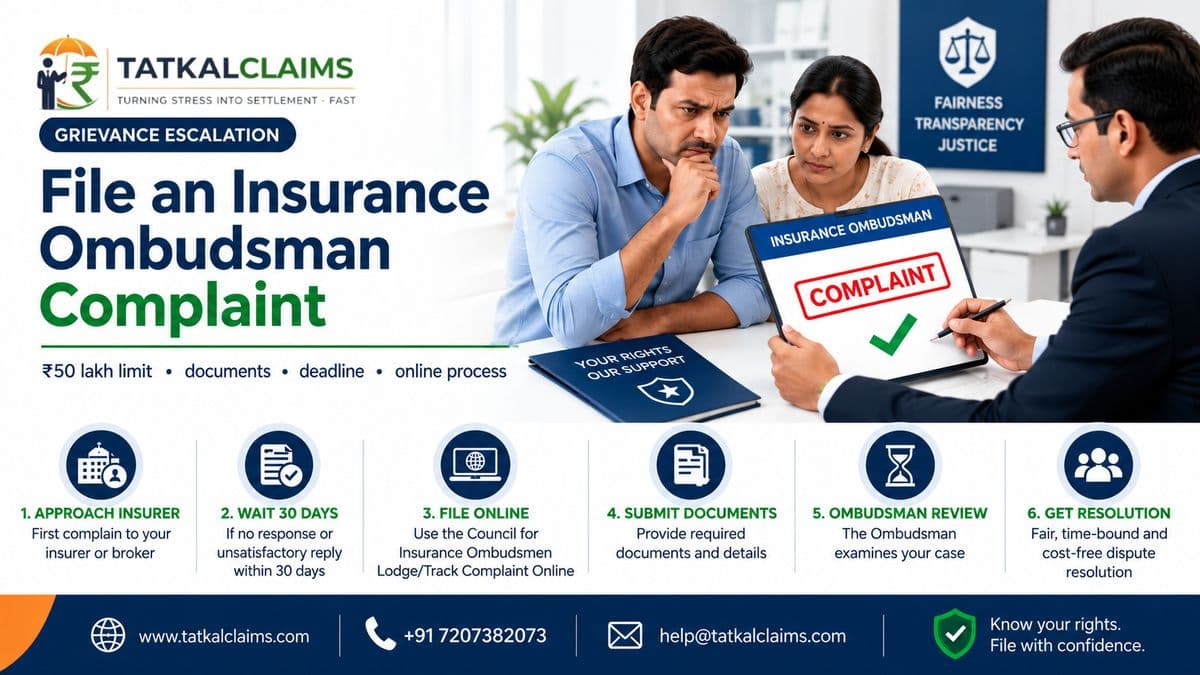

Bima Bharosa and the Insurance Ombudsman are not the same thing. Bima Bharosa is IRDAI's integrated grievance registration and monitoring platform, while the Insurance Ombudsman is a quasi-judicial grievance-redressal forum operating under the Insurance Ombudsman Rules. In many disputes, the practical sequence is insurer grievance first, Bima Bharosa for regulatory grievance tracking where needed, and the Ombudsman if the complaint remains eligible and unresolved.
| Point | Bima Bharosa | Insurance Ombudsman |
|---|---|---|
| What it is | IRDAI grievance registration and monitoring platform | Quasi-judicial insurance grievance-redressal mechanism |
| First step | You should complain to the insurer | You must first make a complaint/representation to insurer or broker |
| Main role | Routes/tracks grievance and insurer resolution in IRDAI repository | Can mediate/recommend or pass an award in eligible complaints |
| Monetary limit | Not the Ombudsman's Rs 50 lakh award jurisdiction | Current CIO guidance: compensation/claim value within Rs 50 lakh limit as applicable |
| Timing distinction | IRDAI/Bima Bharosa guidance expects insurer complaint action within the prescribed grievance TAT | CIO procedure generally requires the insurer/broker opportunity and uses the one-month prerequisite for Ombudsman filing |
| Court/forum restriction | Not a substitute for checking legal limitation periods | Same subject matter should not already be pending/disposed before court, consumer forum or arbitrator |
When Should You Use Bima Bharosa?
IRDAI says a complaint registered on Bima Bharosa flows to the insurer's system and the IRDAI repository. A token number is generated and insurer status updates are mirrored on the portal. This makes Bima Bharosa useful when the insurer has not resolved the grievance satisfactorily and you want a formal regulatory grievance trail.
Bima Bharosa is not correctly described as a court that independently awards your disputed claim amount. Its function is grievance registration, monitoring and escalation within the regulatory framework.
When Can the Insurance Ombudsman Be Used?
The Council for Insurance Ombudsmen currently says you should first complain to the insurer or insurance broker. If you are unhappy with the solution, or there is no response within 30 days, an eligible complaint can be filed with the Ombudsman. CIO's current procedure also says the complaint should be filed within one year from the insurer's rejection, repudiation or partial settlement, the claim value including expenses should not exceed Rs 50 lakh, and the same subject matter should not already have been taken to another forum, court or arbitrator.
A Practical Escalation Sequence
- Submit a written grievance to the insurer's Grievance Redressal Officer with supporting documents.
- Keep the acknowledgement, complaint number and final response.
- If unresolved or unsatisfactory, register/track the complaint through Bima Bharosa where appropriate.
- Check Ombudsman eligibility: subject matter, prior insurer complaint, timing, amount and whether the same dispute is already before another forum.
- File the Ombudsman complaint with the required representation, insurer response, policy and supporting evidence.
What Complaints Can Reach the Ombudsman?
CIO guidance includes delay beyond regulatory timelines, partial or total repudiation of claims, premium disputes, misrepresentation of policy terms, policy-service grievances, claim-related interpretation of policy wording and certain failures to follow policyholder-protection rules. Eligibility should be checked against the current Rules rather than assumed from a general description.
Documents to Keep
- Original grievance sent to the insurer or broker.
- Insurer's rejection, repudiation, partial-settlement or grievance response.
- Policy schedule and wording.
- Claim and payment documents relevant to the dispute.
- KYC and complainant details required by the Ombudsman process.
- Bima Bharosa token/status record if the grievance was registered there.
Which Route Is Better?
They solve different problems, so the answer is often not either/or. Bima Bharosa creates a regulatory grievance trail and monitors insurer handling. The Ombudsman is the independent redressal forum for eligible complaints. A policyholder should choose the next step based on the response already received, the amount involved, the subject matter, limitation periods and whether another legal forum has already been approached.
If the Insurance Ombudsman is the appropriate next step, use our step-by-step Insurance Ombudsman complaint guide for eligibility, the ₹50 lakh limit, filing deadline, documents and online process.
Frequently asked questions
Is Bima Bharosa the same as IRDAI ordering my insurer to pay?
No. Bima Bharosa is IRDAI's grievance registration and monitoring system. It should not be described as an automatic claim-payment order mechanism.
Do I have to use Bima Bharosa before the Insurance Ombudsman?
The Ombudsman Rules require a prior complaint/representation to the insurer or broker. Bima Bharosa can be useful for escalation and tracking, but check the Ombudsman's current procedural prerequisites rather than assuming a Bima Bharosa filing is always mandatory.
What is the Ombudsman monetary limit?
Current CIO guidance states a Rs 50 lakh limit for the relevant claim/compensation jurisdiction. Check the current Rules and complaint formulation before filing.
Can I go to the Ombudsman after filing in consumer court?
CIO guidance states the same subject matter should not already be pending before or disposed of by a court, consumer forum or arbitrator.
Choose the escalation route after defining the underlying problem. For a repudiated claim, start with our claim rejection challenge guide; for a claim that is still pending without a clear decision, use our claim delay escalation guide.