
The adoption of health insurance in India continues to rise, yet the experience of policyholders with their insurers remains under significant pressure. This is the key finding of the second edition of the Hansa Research Health Insurance Customer Experience Score (CuES) 2026 report, released on 19 August 2026.
The report, based on responses from 4,000 respondents across more than 12 health insurance brands, reveals a comprehensive view of how customer expectations, behaviours, and experiences are evolving across the country. The findings highlight a significant shift in the mindset of the health insurance consumer, where growing awareness and need are colliding with persistent service gaps.
The Growing Demand for Health Insurance
Financial protection against rising medical expenses remains the leading purchase motivation for health insurance buyers. In 2026, 54 percent of buyers cited this as their primary reason for purchasing insurance, up from 48 percent in 2025. This increase reflects a growing awareness of the need for financial security in the face of skyrocketing healthcare costs.
Hansa Research's CuES 2026 report found the industry Net Promoter Score at 50 in 2026, down from 55 in 2025. The report links this to rising customer expectations across the insurance journey; the NPS decline should be treated as a survey result, not proof by itself that every insurer's service quality worsened.
Key Pain Points in the Customer Journey
The report reveals that consumers are increasingly asking whether insurers can make healthcare easier to access, simpler to navigate, and more reassuring when they need it most. Experiences across key moments, particularly product relevance, purchase and onboarding, customer support, and claims, are becoming critical differentiators.
Claims Friction Persists
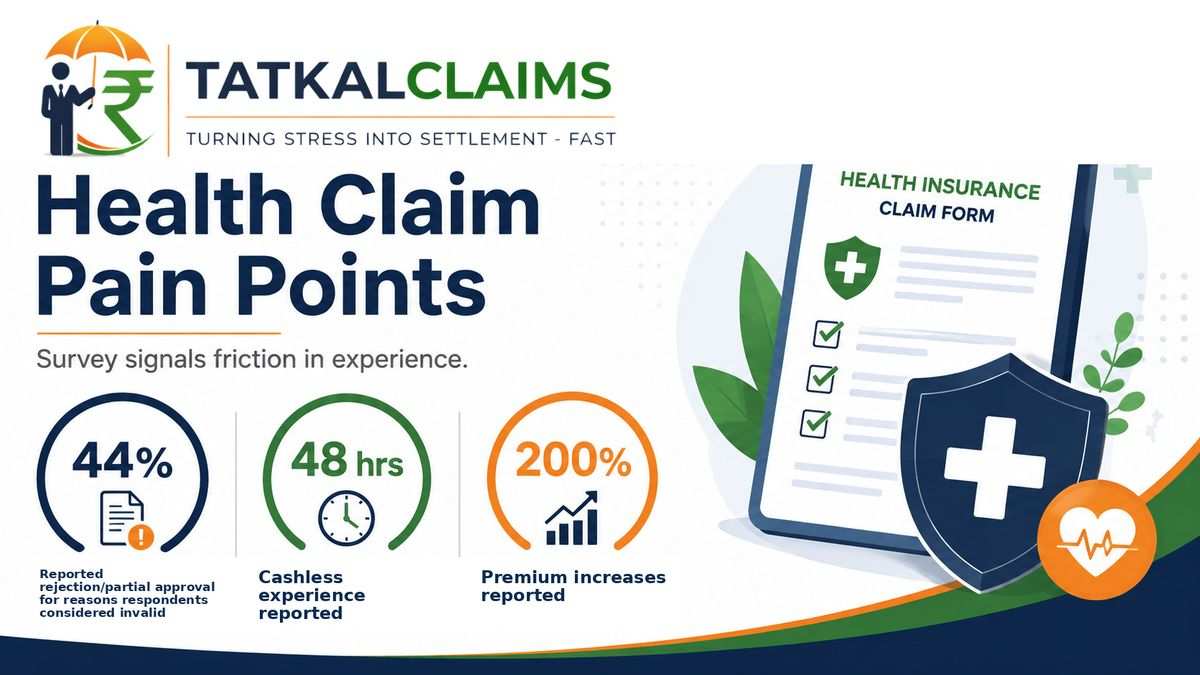
Claims remain a major test of customer experience. In the CuES 2026 survey, a majority of claimants said their cases were processed within two weeks, while about 4 in 10 claimants reported at least one issue, most commonly hospital/provider-network problems, delayed payouts and pre-authorisation difficulties.
Problems relating to the provider or hospital network are the most commonly reported challenge, followed by delayed pay-outs and pre-authorisation issues. This indicates that even as insurers invest in technology and automation, the human and operational aspects of the claims process are still failing customers.
Digital Engagement Growing
Mobile apps and self-service platforms are increasingly being used for policy administration, renewals, and claim tracking, particularly among younger policyholders. This growing digital engagement presents a significant opportunity for insurers to improve customer experience by providing seamless, user-friendly interfaces.
Price Transparency Drives Retention
Unannounced premium increases and hidden terms continue to be the leading drivers for policy porting and switching. Clear communication during policy renewal cycles is proven to directly boost retention rates. This suggests that transparency is not just a regulatory requirement but a critical business imperative.
The Hospital Network Matters
Network access can also become a reimbursement dispute. In our Kerala MEDISEP non-empanelled-hospital case, the High Court directed verification of the treatment and payment of the admissible scheme amount where the petitioner had used a non-empanelled hospital after raising capability concerns about available empanelled facilities.
The report also found that faster claims and stronger hospital networks are the two most important improvements consumers want from their insurers. This signals that the future of health insurance experience is closely linked to access to quality healthcare. Policyholders want their insurance to not only pay for treatment but also make it easier to receive treatment at the best possible facilities.
The Opportunity for Insurers
The report's findings present both a challenge and an opportunity for the health insurance industry. As Hansa Research CEO Praveen Nijhara noted, "As adoption expands and medical costs continue to rise, consumers are becoming more discerning about the protection they purchase and the value they receive from it. Their expectations are extending beyond the policy itself to the experience that surrounds it, with greater demand for simplicity, responsiveness and confidence throughout the policy lifecycle."
For insurers, this is raising the bar for differentiation. The brands that recognise this shift and deliver a seamless, reassuring experience will be best positioned to build stronger and more enduring customer relationships.
The Role of Technology and AI
Hansa Research reported that a majority of surveyed claimants said their cases were processed within two weeks. The report also said technology and AI may help with processing, fraud detection and personalised engagement, but these are potential service improvements rather than a guarantee of better claim outcomes.
Technology alone does not resolve customer-experience problems. The NPS decline indicates lower advocacy in this survey, but it should not be used to infer a specific psychological cause such as a weakening 'emotional connection' without separate evidence.
What This Means for Policyholders
For policyholders, the findings of the CuES 2026 report highlight the importance of choosing an insurer that prioritises customer experience. While price and coverage are important, the real test of an insurer comes when you need to file a claim. A policy that is easy to buy but difficult to claim is not a good investment.
Policyholders should consider the following when evaluating health insurance options:
- Check the insurer's claim settlement ratio and network hospital list.
- Read reviews and understand the insurer's reputation for customer service.
- Ask about the claims process, including pre-authorisation and documentation requirements.
- Understand the policy's terms and conditions, including exclusions and sub-limits.
- Be aware of your rights as a policyholder and the grievance redressal mechanism available to you.
Conclusion
The CuES 2026 report shows a mixed picture: demand for health insurance is rising, the industry NPS fell from 55 to 50, and around 4 in 10 claimants reported at least one issue. These are survey findings that point to areas for improvement, not a finding that every insurer or every claim journey has deteriorated.
For policyholders, the message is clear: be an informed consumer. Do not just buy a policy; buy an experience. Choose an insurer that values your trust and is committed to making healthcare accessible, simple, and reassuring.
Claim rejections and delays can still occur even with a well-chosen policy. If you face a dispute, review the policy wording, claim documents and insurer's written reasons, then use the applicable grievance and escalation routes. Tatkal Claims can help policyholders understand and challenge disputed claim decisions.
Disclaimer: This article is for informational purposes only and does not constitute legal advice. Please consult a qualified professional for legal matters.