The Most Consequential Financial Decision You Are Not Making
Health insurance premiums in India grew over 15 percent in financial year 2026, making it one of the fastest-growing segments in non-life insurance. Yet overall penetration remains very low when compared with the global average. The market is growing. Adequate protection is not keeping pace.
The most consequential financial decision most Indian families make is not a bad investment or a missed opportunity. It is the unconscious choice to keep health insurance for later. More often, it simply gets deprioritised behind the home loan, the school fees, and the immediate demands of daily life. What that delay costs is the window to get covered early, when it is simplest, most affordable, and waiting periods are on your side.
Delaying the purchase or review of health insurance can leave a family exposed to waiting periods, exclusions or inadequate sum insured. But a later claim rejection is not automatically caused by that delay; the outcome depends on the policy terms, disclosures, medical facts and claim evidence.
The Gap Between Buying and Being Protected
The India Health Quotient 2026, a study across 2,600 respondents in 16 cities, found that insured Indians score six points higher on overall well-being than those without cover. That gap held across age groups, income levels, and stress profiles. Six points may not sound like much, but it is larger than the well-being difference between men and women in the study, between cities, and between generations.
The India Health Quotient 2026, conducted by YouGov India for ManipalCigna across 2,600 urban respondents in 16 cities, found that only 12% of policyholders review their policy more than once a year. That finding supports the case for periodic review, but it does not show that infrequent review causes claim rejection.
Why Inadequate Coverage Leads Directly to Claim Disputes
Healthcare costs in India have been rising quickly; recent industry estimates put medical inflation at roughly 12-14% a year. A policy bought several years ago can therefore become inadequate even if its terms remain unchanged. When a bill exceeds the available sum insured, the shortfall is an underinsurance problem, not necessarily a claim rejection.
More dangerously, an outdated policy often has outdated exclusions, waiting periods, and sub-limits that no longer match the policyholder's health profile. A 30-year-old who bought a basic Rs 5 lakh policy and never upgraded it may find that their policy does not cover the advanced cardiac procedure they need at 45. The insurer is not wrong to enforce the policy terms. But the policyholder is left unprotected because they never updated their coverage.
The Trust and Understanding Gap Around Health Insurance
For too long, health insurance has been sold as a product for hospitalisation. You get sick, you file a claim, the policy pays. That is accurate as far as it goes, but it falls short of what health insurance can and should mean: the assurance that allows a family to pursue goals, take decisions, and build for the future without the low-grade anxiety of knowing that one medical event could derail everything.
Closing that gap in perception is not a marketing problem. It is a trust problem. And trust is built one claim experience, one customer conversation, and one honest product communication at a time.
At Tatkal Claims, we see the breakdown of that trust every day. Claims rejected on technical grounds that were never explained at the point of sale. Policyholders who discover exclusions buried in fine print they were never encouraged to read. Families who face delays, partial payments, and endless documentation demands at the moment they are most vulnerable.
What the Numbers Are Telling Us
The India Health Quotient 2026 study also found that 41 percent of urban Indians say chasing financial goals causes them significant stress, while 36 percent say investing in health already strains their budget. These are not people who do not care about their well-being. They are people managing competing priorities without a clear framework that connects health protection to financial planning.
That is a failure the industry has to own. Insurers have not made that connection clear enough, for long enough. And the result is a market where policies are sold but not understood, where coverage exists but is inadequate, and where claim disputes arise not from bad faith but from a fundamental mismatch between what the policyholder expected and what the policy actually delivers.
What Needs to Change: For Insurers, Regulators, and You
As an industry, insurers need to do better on simplicity and transparency. Clearer product language. Proactive communication about coverage, not just at the point of sale but throughout the policy lifecycle. And claims experiences that leave customers more confident in insurance, not less.
Regulators have been proactive. The reform agenda of the last two to three years points in the right direction. Open architecture, digital infrastructure, Insurance for All 2047: the intent is clear. The harder work is implementation, and that belongs equally to the industry.
But consumers, too, need to move from passive awareness to active review. Here is what you should do.
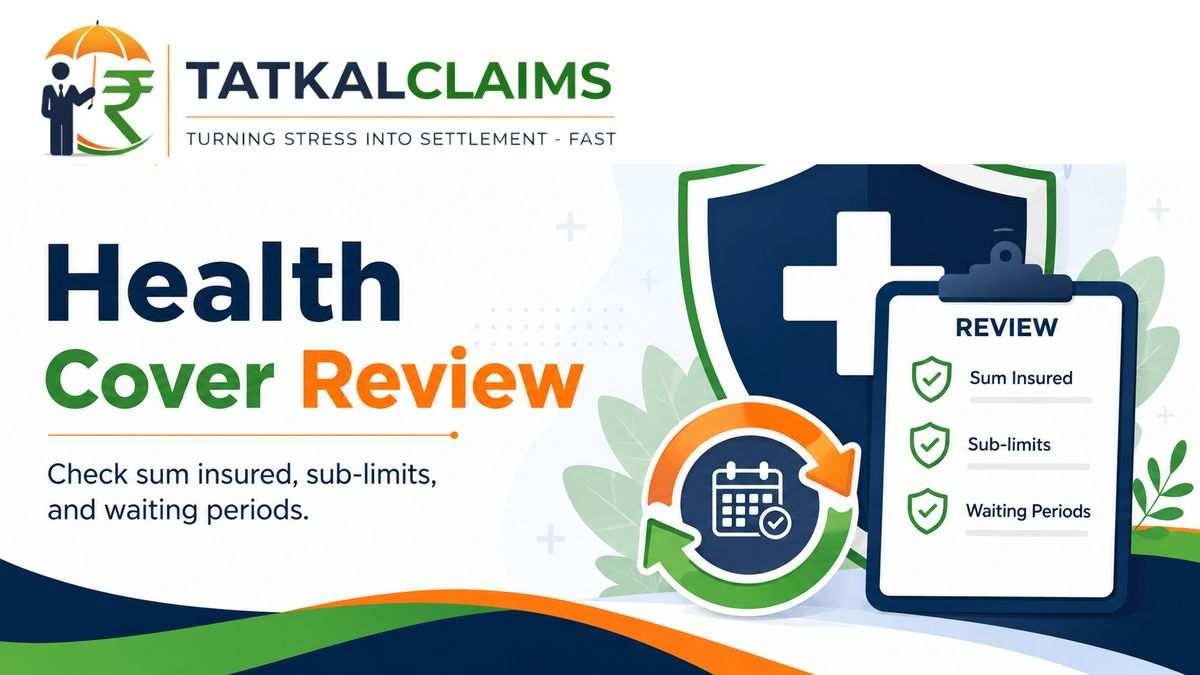
Review your policy at least once a year. Medical inflation and your own health profile change constantly. A policy that was adequate two years ago may be dangerously insufficient today. Check your sum assured against current hospitalisation costs in your city. Verify whether your policy covers advanced procedures, pre-existing conditions, and critical illnesses.
Understand waiting periods and exclusions before you need them. Most health insurance policies have waiting periods for pre-existing conditions, specific illnesses, and maternity benefits. Know these timelines. If you are planning a family or have a family history of certain conditions, factor these into your coverage decisions.
Do not treat insurance as a one-time purchase. Life changes, and your coverage must change with it. Marriage, children, aging parents, new loans, and health diagnoses all alter your insurance needs. Update your policy, increase your sum assured, and add riders as your situation evolves.
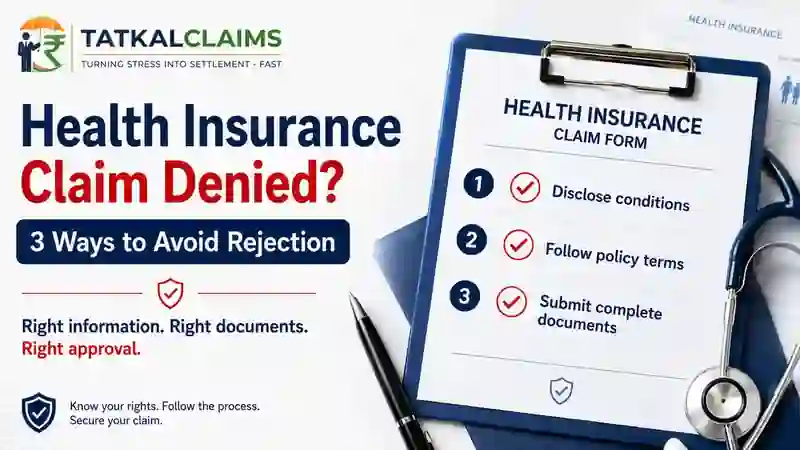
Read the claim process before you file. Know which hospitals are in your insurer's network. Understand the documentation requirements. Keep your policy document, ID proof, and medical records organised. The smoother your claim filing, the harder it is for the insurer to find grounds for rejection.
If a claim is rejected or reduced, ask for the insurer's written reasons and the specific policy clause relied on. Review the proposal form, policy wording and medical evidence, then use the insurer's grievance process and other eligible escalation routes where the decision appears unsupported.
The Real Opportunity
This is not a moment for the industry to mark and move on from. It is a reminder that the distance between where India's health protection stands and where it needs to be is measured, household by household, in decisions that have simply not yet been made. Those decisions are still available.
For every family that delays buying health insurance, there is a family that will face a hospital bill they cannot pay. For every policyholder who never reviews their coverage, there is a claim that will fall short when it matters most. For every insurer that treats claims as cost centres rather than trust-building moments, there is a customer who will tell ten others that insurance cannot be trusted.
Health insurance is not a product decision. It is a nation-building one. But it is also, fundamentally, a personal one. The policy you hold, the coverage you maintain, and the claims you fight for are the building blocks of your family's financial security.
Bottom Line
The gap between buying a policy and maintaining adequate, well-understood cover can contribute to claim shortfalls and disputes, especially where the sum insured or benefits no longer match current needs. It is not established as the single biggest cause of claim rejection; claim outcomes can also turn on disclosure, exclusions, medical necessity, fraud, documentation and claim handling.
At Tatkal Claims, we fight for policyholders who have been let down by that gap. But the best claim is the one that never needs to be disputed because the policy was adequate, the disclosure was complete, and the coverage was reviewed and updated before the crisis arrived.
If you are unsure whether your health insurance actually protects you, review it today. If your claim has been rejected, delayed, or underpaid, challenge it. And if you need help navigating the system, we are here.
Facing a health insurance claim rejection, underpayment, or dispute? Contact our legal team at Tatkal Claims for expert assistance in securing the benefits you and your family deserve.