Why Your Claim Rejection Might Start at the Point of Sale
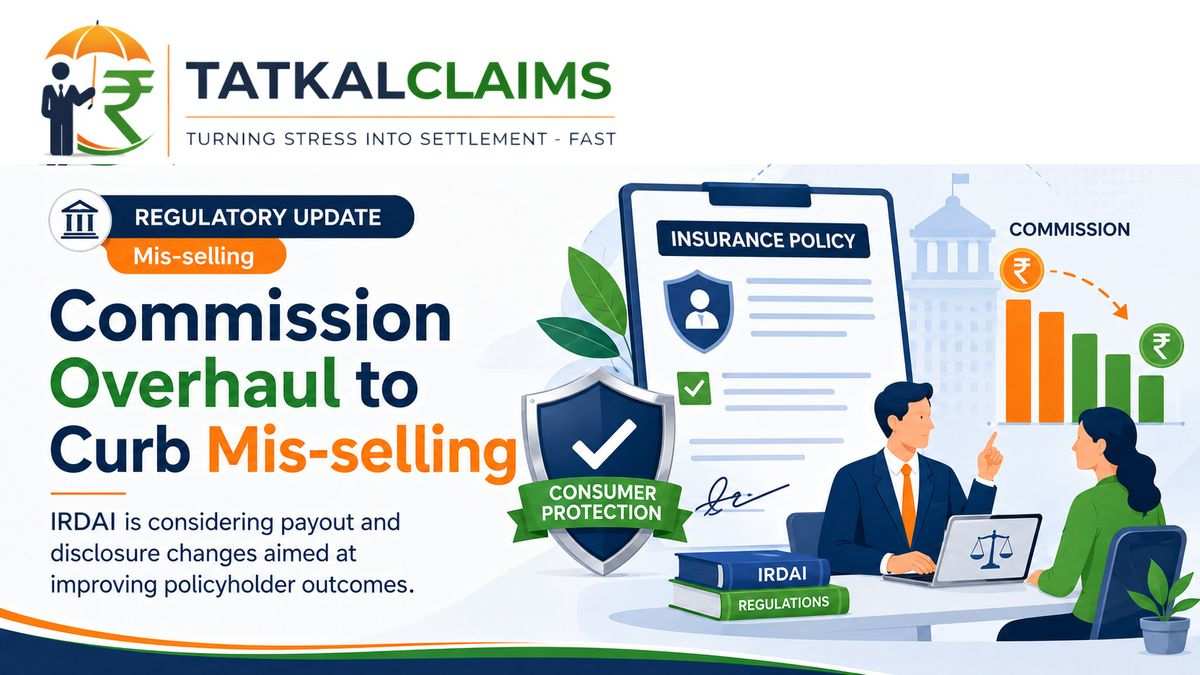
India's insurance regulator, the Insurance Regulatory and Development Authority of India (IRDAI), is considering changes to how insurance agents and distributors are paid. The proposals were reported by Reuters based on sources familiar with discussions between the regulator and the industry; they are not yet final rules.
Reuters reported on 3 July 2026 that IRDAI was considering moving away from large upfront commission payments toward payouts spread over the life of a policy. The original report said a draft framework could be circulated within four to six weeks. Later reporting on 27 July said the consultation paper was likely to slip to late August because of procedural issues and industry feedback. Until IRDAI issues an official paper, the details should be treated as proposals under discussion.
For policyholders, the relevance is the incentive structure at the point of sale. High upfront remuneration can create a risk of unsuitable selling, but it does not mean every mis-sold policy or later claim dispute was caused by commission design.
The Commission Trap: How Mis-Selling Happens
Under the existing framework, distributors can earn commissions of up to 40 per cent of premiums on some life and health insurance products. A significant portion of this is paid upfront at the point of sale.
This structure creates a dangerous incentive. Agents and bank relationship managers are rewarded for sales volume, not for ensuring the product fits the customer's actual needs. The result is a system where the agent's earnings consistently take priority over the policyholder's financial security.
India Today has documented this crisis extensively over the past year. Their reporting revealed how bank relationship managers routinely pushed unsuitable insurance products on customers who simply walked in for fixed deposits or loans. Senior citizens were sold complex insurance-cum-investment products carrying high mortality charges. Customers were pushed into buying policies they did not need, could not afford, or did not understand.
When these policyholders later file claims, they often discover the hard truth: the product was never designed to meet their needs in the first place.
What IRDAI Is Proposing
The regulator is considering several structural changes that could reshape the industry.
Staggered Commission Payments
Reuters reported that one option under consideration is to spread commissions across the life of a policy rather than concentrate them upfront. The policy rationale is to better align distributor remuneration with continued policy servicing and persistency. Whether this model is adopted, and in what form, will depend on the final consultation and regulatory process.
Effort-Based Pricing
Another reported option is an effort-based model that could take account of the work involved in selling and servicing a policy. Reuters said this could differentiate between distributors that provide advisory, documentation and claims-support services and channels that mainly sell products as add-ons. The design is still under discussion.
Product-Based Caps
Sources cited by Reuters said commissions could also be capped based on factors such as product type, policy tenure and complexity. No final cap structure has yet been announced.
Tighter Disclosure Requirements
Reuters also reported that disclosure requirements for agents, brokers and other distributors could be tightened to improve transparency around commission and remuneration structures. The precise disclosure obligations will depend on any consultation paper and final rules.
The timing has moved since the first reports. Ajay Seth had indicated in late June that a distribution-reform consultation paper could come by end-July; reporting on 27 July said it was likely to be deferred to late August. The important point is that, until an official consultation paper or regulation is issued, the reported proposals remain non-final.
The Numbers Behind the Problem
India is one of Asia's largest insurance markets, with gross premium collections exceeding Rs 11.9 lakh crore annually. Yet insurance penetration stood at just 3.7 per cent of GDP in 2024, well below the global average of around 7.2 per cent.
The government has taken steps to address this gap. Last year, it cut the tax on individual health and life insurance premiums to zero from 18 per cent to make policies more affordable. It also opened the sector to 100 per cent foreign direct investment, drawing fresh interest from overseas insurers.
These broader policy changes do not by themselves resolve mis-selling. The commission review is aimed at one part of the distribution incentive structure, alongside existing conduct, disclosure and grievance-redressal rules.
How Mis-Selling Can Contribute to Claim Problems
Mis-selling can create later claim problems when a customer ends up with unsuitable coverage, incomplete disclosures, or a policy that does not match the need the customer thought was being addressed. The outcome in any individual claim still depends on the policy terms, proposal disclosures, evidence and applicable law.
The Wrong Product for the Wrong Need
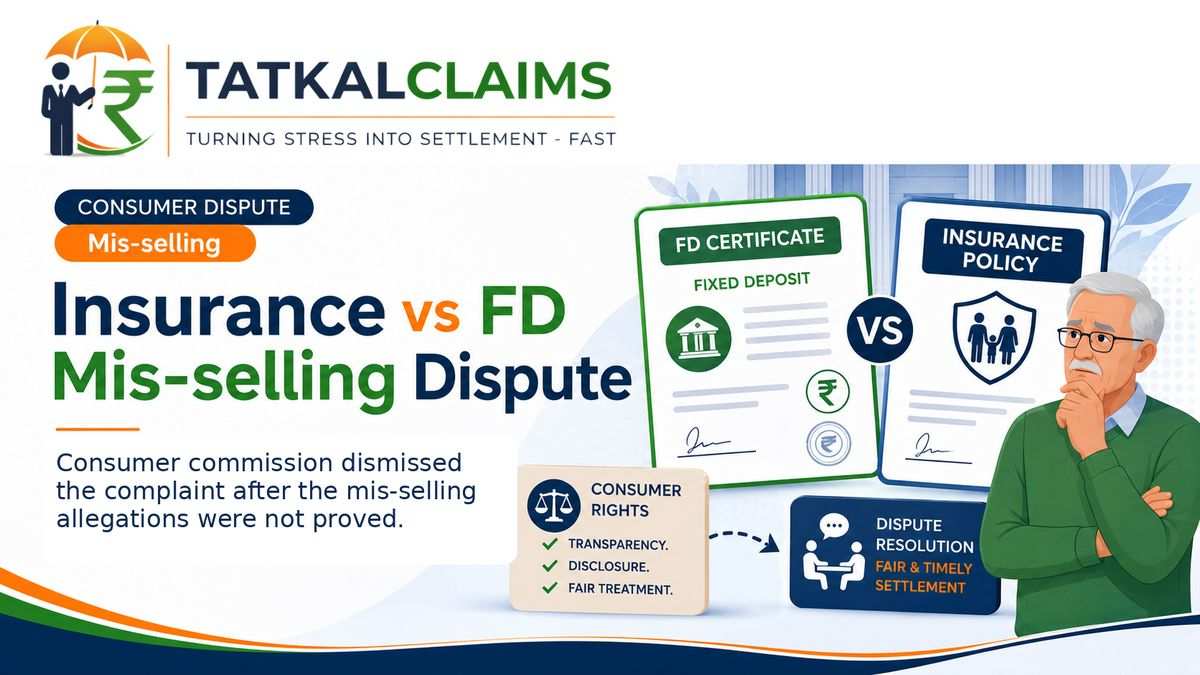
A customer seeking straightforward protection may be sold a product that is geared more toward savings, investment or a different risk need. If the customer later assumes the policy covers a medical or other event that it does not, the dispute may trace back to the mismatch between the sales representation and the actual contract.
Non-Disclosure Encouraged by Agents
Agents eager to close a sale sometimes advise customers to withhold medical history or other material facts. They know that full disclosure might delay or complicate the sale. When the claim is eventually filed, the insurer denies it based on material non-disclosure, and the agent is long gone.
Policies Sold Without Understanding
Senior citizens are frequently sold complex products with long lock-in periods, high charges, and conditions they cannot realistically meet. When they or their families later need to claim, they discover the policy does not cover what they assumed it did.
Bancassurance Abuse
Customers visiting banks for loans or deposits are pushed insurance products as mandatory add-ons. These policies are often bundled, poorly explained, and sold by bank staff with no genuine insurance expertise. When claims arise, the bank disclaims responsibility and the insurer points to policy exclusions.
What You Should Do If You Were Mis-Sold a Policy
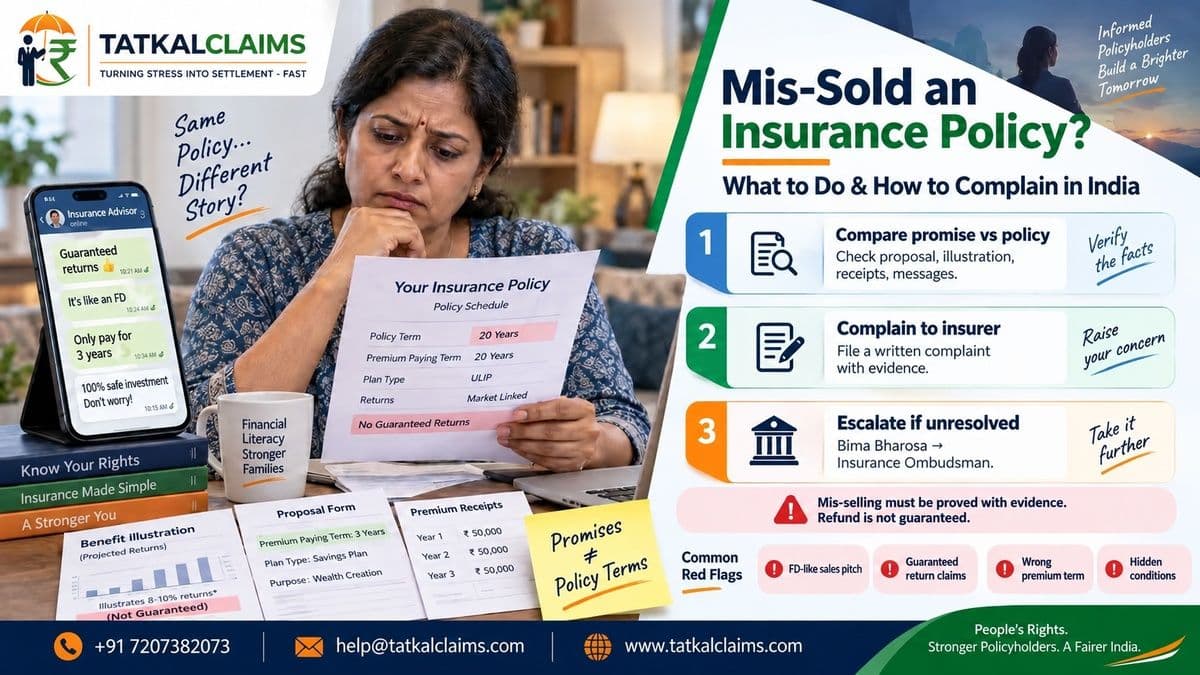
If you suspect you were mis-sold an insurance product, you are not powerless. Here are the steps you should take immediately.
For a step-by-step approach to documenting and escalating a suspected sales problem, use our insurance mis-selling complaint guide.
Gather All Documentation
Collect every piece of paper, email, SMS, and WhatsApp message related to the sale. If the agent made verbal promises, write them down with dates and details. Look for the proposal form you signed, and check whether the agent filled it in accurately. Any discrepancy between what you told the agent and what appears on the form is evidence of mis-selling.
Check the Free-Look Period
Current IRDAI policyholder-protection rules provide a 30-day free-look period for eligible new policies, counted from receipt of the policy document. If you are within the applicable free-look window, review the cancellation terms in your policy and the current IRDAI rules; permitted deductions may apply.
File a Complaint with the Insurer
If the free-look period has passed, file a formal written complaint with the insurer's grievance redressal cell. Quote the specific mis-selling practices, attach your evidence, and demand a resolution. Insurers are required to respond within a defined timeframe.
Escalate to IRDAI
If the insurer does not resolve your complaint satisfactorily, you can escalate the grievance through IRDAI's Bima Bharosa portal. The Insurance Ombudsman is a separate redress route with its own eligibility and timing conditions; where eligible, the process is free and the Ombudsman can award compensation up to Rs 50 lakh.
Seek Legal Assistance
For complex cases involving large sums, claim rejections due to mis-selling, or disputes over policy terms, professional legal help can make the difference. At Tatkal Claims, we specialise in challenging unfair claim rejections, interpreting policy wordings, and holding insurers and distributors accountable for mis-selling practices.
How to Spot Mis-Selling Before You Buy
Prevention is always better than fighting a rejection. Here are the warning signs that an agent or bank is prioritising their commission over your needs.
The agent is pushing a single product repeatedly, without comparing alternatives. They discourage you from reading the policy document or fine print. They rush you to sign before you can think it over. They advise you to hide medical history or other material facts. They cannot clearly explain the exclusions, waiting periods, or claim process. The product is bundled with a loan or deposit that you actually came for. They promise returns or benefits that sound too good to be true.
If any of these red flags appear, walk away. A genuine insurance advisor will welcome your questions, encourage comparison, and document everything transparently.
Looking Ahead: A Better System for Policyholders
If the reported commission reforms are ultimately adopted, they could reduce reliance on large upfront payouts and place more weight on ongoing servicing. That could improve incentive alignment, but the final effect will depend on the rules adopted and how insurers and distributors implement them.
The policy objective is to make distributor incentives more consistent with suitability, persistency and service. It should not be assumed that a new commission structure alone will eliminate aggressive or deceptive sales practices; supervision, disclosures, complaint handling and enforcement will remain important.
For policyholders affected by mis-selling, the proposed reforms are relevant because they show regulatory attention to distribution incentives. They do not automatically reopen or decide an existing complaint or claim.
Bottom Line
Mis-selling can contribute to claim disputes, financial distress and loss of trust when the policy sold does not match the customer's needs or when material information is mishandled during the sale. The reported commission overhaul is intended to address incentives that regulators and industry sources believe can contribute to unsuitable selling.
If you are dealing with a claim rejection or suspected mis-selling, focus on the evidence in your own case: the proposal form, policy wording, sales communications, disclosures and grievance record. The proposed commission reforms provide regulatory context, but they do not by themselves determine whether your complaint or claim should succeed.
Facing a claim rejection due to mis-selling, or suspect your policy was sold under false pretences? Contact our legal team at Tatkal Claims for expert assistance in challenging unfair claim denials and holding distributors accountable.