When the CEO Has to Look You in the Eye
For years, Indian policyholders fighting claim rejections have felt like they were shouting into a void. Letters go unanswered, calls are transferred endlessly, and the people who actually hold power remain safely hidden behind layers of customer service scripts and legal departments. That may finally be changing.
Two separate government and regulatory initiatives are relevant here. Since January 2024, the Department of Financial Services (DFS) in the Ministry of Finance has reviewed selected grievances with complainants participating alongside chairpersons, managing directors, CEOs and senior management of the concerned financial institutions. Separately, IRDAI has reviewed insurer grievance-handling systems with Chief Compliance Officers and Grievance Redressal Officers. The direct CEO-and-complainant review is a DFS mechanism, not an IRDAI programme.
The Scale of the Problem: 257,000 Grievances and Counting
For insurer-wise context on the size and mix of recent grievances, see our Q1 FY27 insurance complaints analysis, including claim-related complaints and why raw complaint counts should not be treated as insurer rankings.
IRDAI's Annual Report 2024-25 recorded about 2.58 lakh grievances on the Bima Bharosa portal: roughly 1.20 lakh relating to life insurance and 1.37 lakh to general and health insurance. These complaints cover multiple categories, including claims, servicing and sales-related issues; they should not all be described as rejected claims.
The volume of complaints helps explain why grievance handling is receiving closer attention. The DFS review mechanism brings selected complainants into direct review meetings with senior leadership, while IRDAI's role is to supervise insurers' grievance systems, policyholder-protection standards and compliance with prescribed processes.
Two Complementary Mechanisms: DFS Reviews and IRDAI Supervision
On 26 November 2025, IRDAI convened a high-level meeting with the Chief Compliance Officers and Grievance Redressal Officers of all insurers. The discussions focused on policyholder protection, grievance-redressal standards, complaint trends and operational challenges. This was separate from the DFS practice of reviewing selected grievances with complainants and senior financial-institution leaders.
IRDAI also engaged Insurance Ombudsmen from Bhopal and Thane, who shared operational issues observed in cases handled by their offices. That input formed part of IRDAI's broader review of how insurers classify, process and resolve grievances.
IRDAI expressed concern about rising complaint volumes and urged insurers to improve the quality and timeliness of resolutions. That is a regulatory-supervision message; it should not be read as evidence that every individual complaint will receive CEO-level intervention.
The Chairman's Message: When in Doubt, Choose the Customer
IRDAI Chairman Ajay Seth delivered a line that every policyholder should write down and quote back to their insurer. He said, compliance cannot be a department, it must be a mindset. And grievance redressal cannot be the end of a process, it must be our early warning system. When in doubt, choose the customer. If we do that consistently, trust will follow, growth will follow, and the industry will stand stronger than ever.
The chairman's message was about trust, organisational culture and using grievances as an early-warning signal. The available record supports stronger insurer accountability and customer-focused complaint handling; it does not support attributing a joint RBI-IRDAI financial-stability warning to this meeting.
Why Senior-Leadership Accountability Matters for Your Claim
For a policyholder fighting a claim rejection, the practical value is that complaint patterns are receiving more senior attention across both government review and insurer governance. That does not guarantee a different outcome in any individual claim, but it increases the importance of documenting the grievance clearly and using the formal escalation channels.
IRDAI's policyholder-protection framework requires insurers to maintain governance around complaints, including analysis of complaint categories and root causes. This creates a route for recurring problems to reach senior management and board-level policyholder-protection oversight, even though an individual grievance is not automatically placed before a CEO.
The Operational Changes You Should Expect
At its November 2025 review, IRDAI urged insurers to strengthen several operational areas that affect policyholders.
First, IRDAI advised insurers to develop clear and standardised procedures for distinguishing complaints from service requests so that grievance reporting and handling are consistent.
Second, insurers must follow the prescribed grievance timelines. Bima Bharosa's current guidance says an insurer should resolve a complaint within 15 days of receipt. If it is not resolved within the prescribed period, or the response is unsatisfactory, the policyholder can escalate through IRDAI's grievance channels.
Third, insurers must strengthen internal systems to ensure these timelines are met. The regulator expressed particular concern over the rising number of complaints and emphasised the need to significantly improve both the quality and timeliness of resolutions.
How to Use This Shift to Your Advantage
If you have an active claim dispute or grievance, this regulatory environment is more favourable than it has been in years. Here is how to leverage it.
Document your complaint properly. Keep written records of the complaint, supporting documents, dates and responses. Take a written acknowledgement where possible and track whether the insurer resolves the grievance within the prescribed timeframe.
Escalate strategically. If the insurer does not resolve the grievance within the prescribed period, or you are dissatisfied with the response, use the insurer's Grievance Redressal Officer and then the formal IRDAI/Bima Bharosa route as applicable. Do not assume that every unresolved complaint is personally reviewed by a CEO.
Use the Bima Bharosa portal. A complaint registered there flows to the insurer's system and the IRDAI repository, generates a token number and can be tracked online. Status updates from the insurer are mirrored in the portal.
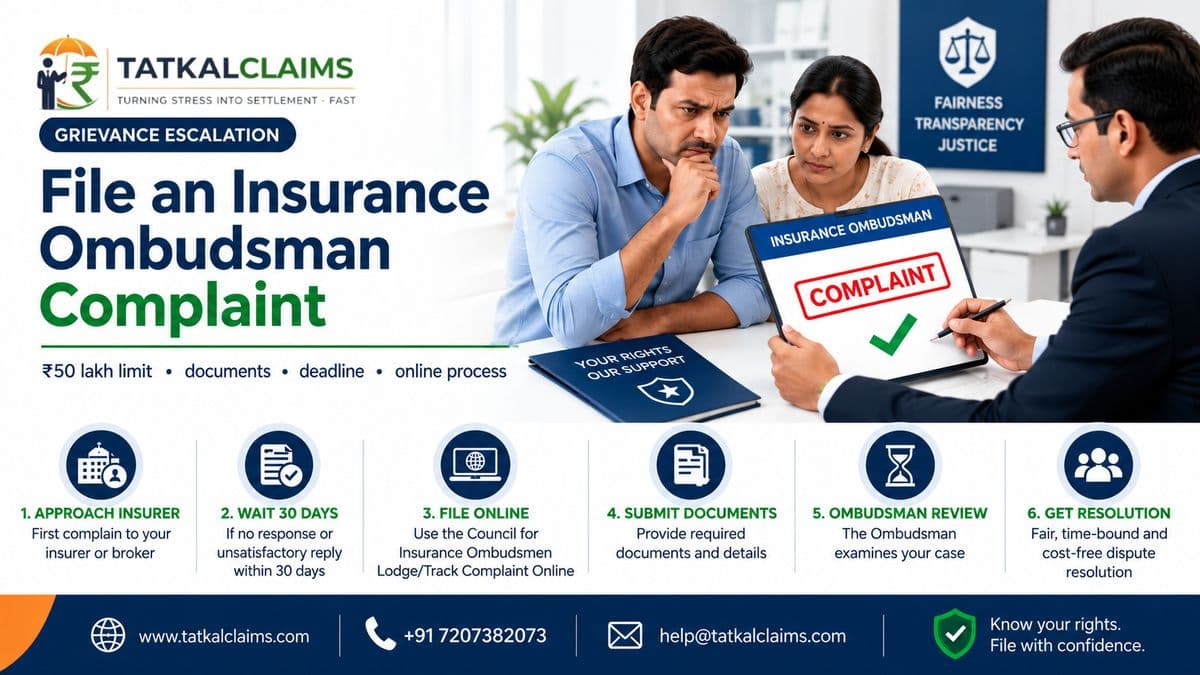
Approach the Insurance Ombudsman. If the insurer's final response rejects your complaint or offers inadequate redress, you can take the matter to the Insurance Ombudsman. The Ombudsman can award compensation up to Rs 50 lakh, and the process is free for policyholders. The Ombudsman offices are now actively feeding operational challenges back to IRDAI, which strengthens the regulatory pressure on insurers.
For route selection, see our Bima Bharosa vs Insurance Ombudsman comparison. If the Ombudsman is the appropriate forum, use the Insurance Ombudsman complaint guide for eligibility, limits, deadlines and filing steps.
Contact IRDAI through the current official grievance channels if escalation is needed: call 155255, email complaints@irdai.gov.in, use the Bima Bharosa portal, or send a written complaint to the Policyholders Protection and Grievance Redressal Department at IRDAI's Hyderabad office.
The Bigger Picture: Trust as a Regulatory Priority
Mahavir Chopra, founder of Beshak.org, captured the significance of this shift. He noted that grievance systems have been a problem for a long time, and that this meeting by the Chairman is a big relief. He called it heartening that there is refocused attention on hearing and solving customer grievances, which is the first step to bringing back trust in the insurance space.
He also observed that the fact that there was a structured review of complaints, systems, and insurer performance makes him optimistic about the future. All in all, a great start. Of course, it now needs focused execution, and he is confident this can help reduce the trust deficit the industry is mired in.
At Tatkal Claims, we view the combination of DFS direct grievance reviews and IRDAI's insurer-focused supervision as a constructive signal. The effect for policyholders will depend on execution: better classification, timely resolution, credible escalation and action on recurring root causes.
What Insurers Are Now Required to Do Internally
The regulatory pressure is translating into concrete internal requirements for insurance companies. Every insurer must now maintain a board-approved grievance redressal policy. All complaints must be logged through the Integrated Grievance Management System. Every insurer must have a designated Grievance Redressal Officer whose contact details are provided in all policyholder communications. Regular reporting of complaint categories, numbers, and root cause analysis must be placed before the policyholder protection committee at every meeting.
Insurers must also ensure that their complaint categorisation aligns with IRDAI's classification system. Complaints must be routed to the responsible department with defined turnaround times, and if those timelines are exceeded, the matter must automatically escalate to the next higher authority. This dual-check mechanism is designed to prevent complaints from disappearing into departmental black holes.
Bottom Line
For insurance policyholders, the important distinction is this: DFS has been bringing selected complainants into reviews with senior financial-institution leadership, while IRDAI separately supervises insurers' grievance systems and has pressed them to strengthen complaint handling. Together, these measures increase scrutiny, but they do not create an automatic CEO hearing for every insurance grievance.
IRDAI's message to insurers is clear: grievance redressal should be treated as an early-warning system and customer trust should shape compliance culture. For policyholders, the practical response is to use the documented grievance process, preserve evidence and escalate through the official channels when the insurer's response is late or unsatisfactory.
If you are currently fighting a claim rejection, policy cancellation, or unfair settlement, this is the moment to escalate. The regulatory winds have shifted. Use them.
Facing a claim rejection or unresolved insurance grievance? Contact our legal team at Tatkal Claims for expert assistance in leveraging the new regulatory environment to secure the benefits you deserve.