If you were sold an insurance policy based on misleading promises — for example, you were told it was a fixed deposit, promised benefits that do not match the policy, told you only had to pay premiums for a few years when the policy requires more, or important conditions were not properly explained — you may be dealing with insurance mis-selling.
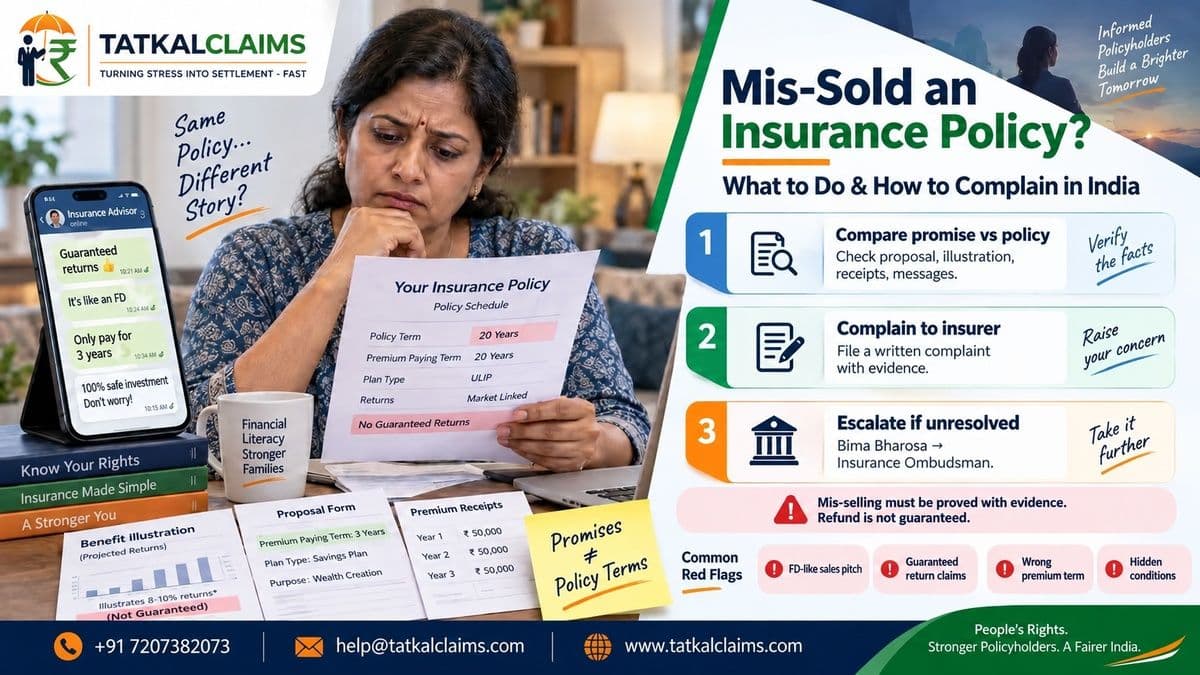
If you believe your insurance policy was mis-sold, don't start by making a general allegation against the agent or insurer. Start by collecting evidence. Get your policy document, proposal form, benefit illustration, premium receipts and any emails, WhatsApp messages, brochures, recordings or other material showing what you were told when the policy was sold. Then compare those representations with what the policy actually provides.
If there is a material difference, make a written mis-selling complaint to the insurer explaining exactly what was represented, what the policy actually says, and what resolution you are seeking.
Was Your Insurance Policy Mis-Sold? Quick Checklist
Possible warning signs include:
- You were told an insurance policy was a fixed deposit or bank investment.
- You were promised a guaranteed return that isn't reflected in the policy documents.
- You were told premiums only needed to be paid for 2 or 3 years, but the policy has a longer premium-paying term.
- The maturity value or benefits were materially different from what the salesperson represented.
- Important exclusions, charges, surrender conditions or risks were not properly explained.
- Your income, occupation, health information or financial details were entered incorrectly without your knowledge.
- You were pressured into buying insurance to obtain a loan, locker, investment or another banking service.
- You were told an insurance product was mandatory when it was not.
- You were asked to sign blank or incomplete forms.
- The policy you received is materially different from the product you understood you were purchasing.
None of these automatically proves mis-selling. The evidence and circumstances surrounding the sale matter.
What Is Insurance Mis-Selling?
Insurance mis-selling generally refers to situations where an insurance product is sold through misleading representations, material information is concealed or incorrectly presented, or the policy sold is materially different from what the customer was led to believe.
A disappointing investment return by itself does not necessarily mean a policy was mis-sold. The important question is: what were you told when you agreed to buy the policy, and how does that compare with the actual contract?
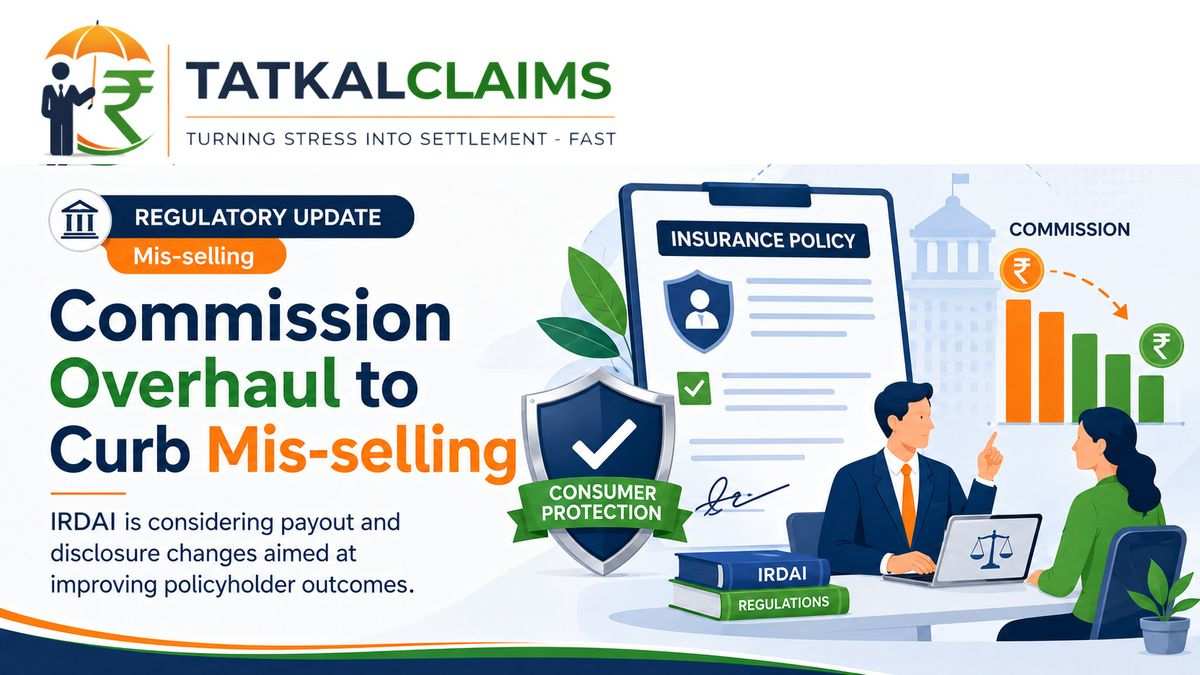
For regulatory context on why sales incentives matter, see our analysis of the IRDAI commission-reform proposals and mis-selling risk.
For example, there is an important difference between "I expected this policy to earn more money" and "The salesperson represented this as a five-year fixed deposit with guaranteed maturity proceeds, but the document I received is a long-term life insurance policy with materially different benefits and surrender conditions." The second situation raises a much clearer mis-selling issue.
Common Examples of Insurance Mis-Selling in India
Insurance Sold as a Fixed Deposit
One of the most common complaints involves an insurance product being presented as an FD, savings scheme or similar investment. If this happened, collect anything showing how the product was described to you, including messages, emails, handwritten calculations, brochures, bank correspondence, recordings where lawfully available, benefit illustrations, payment instructions and witnesses who were present during the sale.
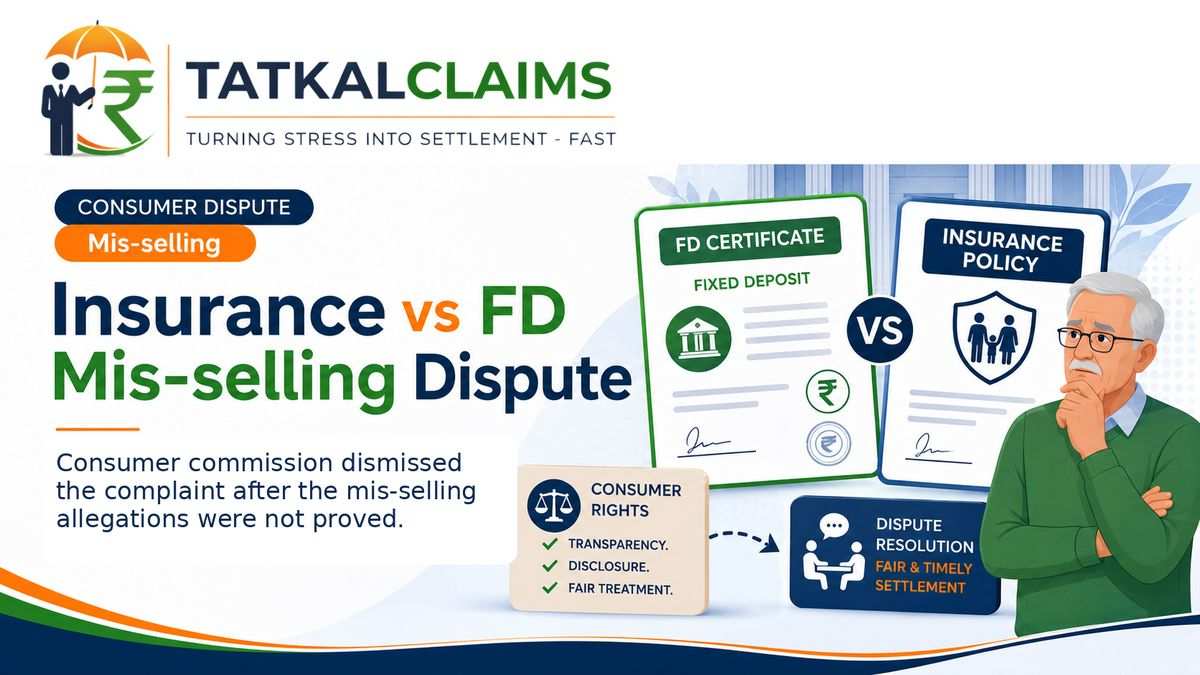
A real-world example is the Axis Bank–Max Life FD mis-selling dispute, where the consumer complaint was dismissed because the alleged mis-selling was not proved on the evidence.
Wrong Premium-Paying Term
Another common dispute arises when a customer says, "I was told I only had to pay for three years," but the policy requires premiums for substantially longer. Compare the representation with the policy schedule and benefit illustration. If you have written or electronic evidence of the shorter period being promised, preserve it.
Misleading Return or Maturity Promises
If specific returns or maturity amounts were represented, compare those statements with the insurer's official benefit illustration and policy documentation. Do not rely solely on your memory if documentary evidence is available.
Important Policy Conditions Were Not Explained
A customer may discover later that the policy contains surrender conditions, exclusions, charges, waiting periods or other limitations that were materially different from what was represented during the sale. Non-disclosure alone does not automatically establish a successful complaint; the nature of the information, representations made, documentation and circumstances of the sale all matter.
Digital sales can create a different set of disclosure and choice problems; see our online-insurance dark-patterns analysis for examples of misleading pricing, forced action and cancellation friction.
What Should You Do Immediately After Discovering Mis-Selling?
- Do not destroy or alter documents.
- Download or save relevant messages and emails.
- Obtain the complete policy document.
- Obtain the proposal form if available.
- Find the benefit illustration or sales illustration.
- Collect premium-payment records.
- Write down what happened while you still remember the details.
- Identify who sold the policy, where and approximately when.
- Compare what was represented with the actual policy.
- Prepare a factual written complaint.
A chronological account is much more persuasive than simply saying, "The agent cheated me." Explain exactly what was said, what you relied upon, what you subsequently discovered and what evidence supports your version.
Evidence That Can Help Prove Insurance Mis-Selling
Useful records may include:
- Policy schedule and complete policy wording
- Proposal form
- Benefit illustration
- Premium receipts and bank statements
- Sales brochures
- Emails, SMS and WhatsApp conversations
- Call recordings where legally obtained and available
- Welcome-call records
- Medical or financial declarations
- Written calculations provided during the sale
- Complaints previously made to the bank, agent or insurer
- Witnesses present during the sale
Also examine the proposal form carefully. If information appearing in the proposal was not supplied by you, or differs materially from what you disclosed, identify those discrepancies specifically in your complaint.
Can You Cancel a Mis-Sold Policy During the Free-Look Period?
If you recently received the policy, check the product-specific free-look rule. For health insurance policies with a term of one year or more, IRDAI's current Health Department guidance provides a 30-day free-look period from receipt of the policy document, provided no claim has been made. Life-insurance policies also operate under IRDAI's current life-product and policyholder-protection framework, so check the issued policy document and applicable current circular before relying on the free-look right.
The precise refund calculation can include permitted deductions, so the free-look mechanism should not simply be described as an unconditional full refund. If you are still within the applicable free-look period and do not want the policy, acting promptly is important.
What If the Free-Look Period Has Already Expired?
Expiry of the free-look period does not by itself determine whether the original sale involved misrepresentation or mis-selling. But it also does not mean you automatically have a right to cancel the policy years later.
Identify what exactly you were promised, who made the promise, when it was made, what the policy actually provides, when you discovered the difference, why the discrepancy was not identified earlier and what evidence supports your version. The longer the period since purchase, the more important contemporaneous evidence may become.
How to File an Insurance Mis-Selling Complaint
Step 1: Complain to the Insurance Company
Start with the insurer's grievance mechanism or Grievance Redressal Officer. Your complaint should clearly contain your name, policy number, date of purchase, identity of the salesperson or intermediary where known, what was represented to you, what the policy actually provides, when you discovered the discrepancy, supporting evidence, previous correspondence and the resolution you are seeking.
Submit the complaint in writing and keep the acknowledgement or reference number. Bima Bharosa's general FAQ says the insurer should resolve a policyholder complaint within 15 days. If the dispute concerns health insurance, IRDAI's current Health Department TAT table separately lists 14 days for action on the complaint and intimation of the decision.
Step 2: Escalate Through IRDAI's Bima Bharosa
If the insurer does not resolve your grievance within the prescribed period or you are dissatisfied with its response, IRDAI provides the Bima Bharosa grievance platform. A complaint registered through Bima Bharosa flows to the insurer's system as well as IRDAI's repository and can be tracked using the generated token number.
Bima Bharosa is a grievance-registration, tracking and regulatory-monitoring mechanism. Filing there does not automatically establish that mis-selling occurred or guarantee cancellation or refund of a policy.
Step 3: Consider the Insurance Ombudsman
Depending on the nature of the complaint and eligibility requirements, the Insurance Ombudsman may provide another grievance-redressal route. If the insurer gives no reply, the Council for Insurance Ombudsmen requires expiry of one month from the complaint before that route is available; the complaint is generally to be filed within one year, the compensation sought must not exceed Rs 50 lakh, and the same subject matter must not already be pending before or disposed of by a court, consumer forum or arbitrator.
If you are unsure which route should come next, use our Bima Bharosa vs Insurance Ombudsman comparison. If your complaint is eligible for the Ombudsman, follow the Insurance Ombudsman filing guide for the current process, documents and deadline.
What If a Bank Mis-Sold the Insurance Policy?
Bank-linked insurance mis-selling deserves particular attention because customers may believe they are purchasing a bank deposit or investment rather than an insurance product.
Write down exactly what happened. Identify the bank branch, employee if known, transaction date, amount, policy issued and representations made. Preserve both the banking records and insurance records. Depending on the facts, it may also be appropriate to complain to the bank in addition to the insurer.
What If You Were Told the Policy Had Guaranteed Returns?
First determine what was actually guaranteed. Insurance products can contain guaranteed and non-guaranteed components depending on the product. Therefore, do not assume that use of the word "guaranteed" itself proves wrongdoing.
Compare what the salesperson promised with what the insurer's official benefit illustration and policy documents state. If you were given handwritten or electronic projections, preserve them.
What If the Agent Filled the Proposal Form?
Obtain a copy and read it carefully. Look for information concerning income, occupation, existing insurance, medical history, nominee information, contact details, financial circumstances and answers to declarations.
If information is incorrect, identify exactly which answers you dispute and what information you say you actually supplied. Do not simply state that the form was filled by the agent; explain the specific discrepancy and provide supporting evidence where possible.
Can You Get Your Premium Back After Insurance Mis-Selling?
Possibly, depending on the facts and the remedy available — but a refund should never be presented as guaranteed.
The outcome can depend on evidence of misrepresentation, policy terms, documentation signed during the sale, benefit illustrations, welcome or verification calls, how long the policy has existed, premiums already paid, benefits already received, insurer investigation, applicable regulatory provisions and the forum hearing the dispute.
Be cautious of anyone who promises that simply filing an IRDAI or Ombudsman complaint guarantees recovery of all premiums.
Common Mistakes When Filing a Mis-Selling Complaint
Avoid weakening a potentially valid complaint by making broad allegations without explaining the misrepresentation, deleting messages or emails, failing to obtain the proposal form, ignoring the benefit illustration, making claims you cannot support, giving inconsistent versions of what happened, waiting unnecessarily before complaining, filing multiple proceedings without understanding how they interact, or assuming every disappointing policy is necessarily mis-sold.
A strong complaint is specific, chronological and evidence-based.
How Tatkal Claims Can Help With Insurance Mis-Selling
Tatkal Claims assists policyholders in reviewing insurance disputes, including alleged mis-selling. The first objective should be to determine what actually happened — not to promise a refund before reviewing the documents.
A review may include the policy documents, proposal form, benefit illustration, sales communications, bank records, premium history, grievance correspondence, insurer's response and evidence supporting the alleged representation. Based on those records, the issue can be identified more precisely and appropriate grievance options considered.
No particular result can be guaranteed because every mis-selling complaint depends on its facts, evidence, policy documents and applicable rules.
Frequently Asked Questions
What should I do if I was mis-sold an insurance policy?
Collect the policy, proposal form, benefit illustration, payment records and evidence of what was represented during the sale. Compare those representations with the actual policy and make a written grievance to the insurer identifying the discrepancies.
Is insurance mis-selling illegal in India?
Insurance sales and conduct are subject to regulatory requirements, and misleading or improper sales practices can raise regulatory and other legal issues. Whether a particular transaction amounts to actionable mis-selling depends on the facts and evidence.
Can I complain to IRDAI about insurance mis-selling?
Yes. IRDAI's Bima Bharosa system allows policyholders to register and track grievances involving insurers and relevant insurance entities. Policyholders should first approach the insurer's grievance mechanism.
How long does an insurer have to respond to my complaint?
Bima Bharosa's general FAQ says an insurer should resolve a policyholder complaint within 15 days. For health-insurance complaints specifically, IRDAI's current Health Department TAT table lists 14 days for action on the complaint and intimation of the decision.
Can I cancel a policy after the free-look period?
Expiry of the free-look period does not itself determine whether the policy was mis-sold. However, cancellation or refund after that period is not automatic. The available remedy depends on the circumstances, policy, evidence and applicable rules.
What if my bank told me the insurance policy was an FD?
Preserve the bank and insurance records and any evidence showing how the product was represented. Make a detailed complaint identifying the branch, salesperson where known, transaction, representation made and how it differs from the policy actually issued.
What evidence is best for proving insurance mis-selling?
Contemporaneous evidence is particularly useful: emails, messages, benefit illustrations, proposal forms, sales documents, payment records and other material showing what was represented when the policy was purchased.
Will the Insurance Ombudsman order a refund?
Not automatically. The Ombudsman considers eligible complaints under the applicable rules and on their facts and evidence. Do not treat filing a complaint as a guaranteed refund.