What an 87% Protection Gap Actually Means
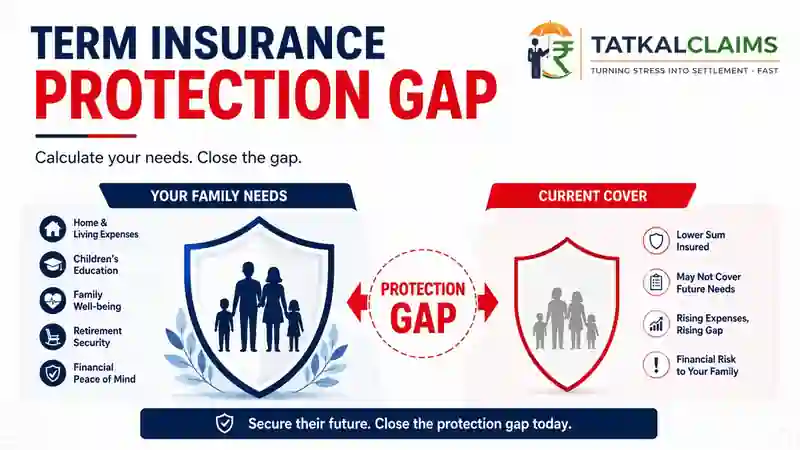
A 2023 National Insurance Academy study estimated an overall mortality protection gap of 87% in its study sample, with the 26–35 age group above 90%. That does not mean 87% of Indians have no life insurance. It means the estimated protection need was far greater than the mortality cover available.
That distinction matters. A person can own one or more life policies and still leave a large shortfall if the total death benefit does not match the family’s liabilities, income dependence and future commitments.
The Real Question Is Not “Do I Have Term Insurance?”
A term plan bought at 28 may have been perfectly sensible at the time. Ten years later, the same sum assured may sit beside a home loan, two children, dependent parents and a household that now relies on one main income. The policy can still be valid while the cover has become inadequate.
The opposite can also happen. A household may have repaid major debt, accumulated liquid assets and reduced the number of financially dependent years ahead. Adequacy is therefore a family-balance-sheet question, not a fixed multiple that works for everyone.
Separate Cover Amount From Optional Features
A basic term plan is designed primarily to pay a death benefit if the insured event occurs during the policy term, subject to the contract. Features such as disability benefits, critical-illness benefits, terminal-illness benefits, premium waiver, return of premium or structured payout are product-specific or rider-based. They should be evaluated separately from the core question of how much death cover the family actually needs.
1. Disability or Illness Benefits Are Not Automatic
Do not assume a term policy will replace income during disability or pay on diagnosis of a critical or terminal illness. Some products include such benefits and others require separate riders. Read the exact trigger, exclusions, survival period if any, benefit amount and whether the rider only waives future premiums or also pays a lump sum.
2. Lump Sum vs Income Payout Is a Product Choice
Some policies offer a lump sum, an income stream or a combination. None is universally superior. The right structure depends on debt, the surviving family’s cash-flow needs, financial experience and whether large expenses are due soon after death. What matters is that the chosen payout structure matches the family’s actual obligations.
3. Missing a Due Date Does Not Always Mean Instant Loss of Cover
A missed premium should be handled immediately, but the consequence depends on the policy’s grace-period and revival terms. The policy document should state the premium due dates, grace period and implications of discontinuing payment. If payment remains outstanding beyond the applicable period, the policy may lapse or move into another status depending on the product. Do not assume years of cover disappear the day after one missed due date.
4. Pure Term Insurance Usually Has No Survival Benefit
With pure term insurance, not receiving a maturity payout is part of the product design rather than a hidden defect. Return-of-premium variants are different products with different pricing and terms. Compare them on protection need, affordability and contract features—not on the idea that premiums are “wasted” if no death claim occurs.
A Practical Way to Test Whether Your Cover Is Enough
Instead of starting with a rule such as “10 times income,” build the requirement from the family’s actual obligations. One workable review is:
| Question | What to Include |
|---|---|
| What debts must disappear if I die? | Home loan, education loan, business borrowing, personal loans and any other liabilities the family would still carry |
| How many years of household income need replacing? | Essential living costs for the period in which spouse, children, parents or other dependants rely on your earnings |
| Which future goals still need funding? | Children’s education, caregiving commitments and other large family obligations that would continue after your death |
| What money would genuinely be available to survivors? | Liquid assets and existing life cover that can realistically be used by the family; do not double-count assets already earmarked for another essential need |
| Does employer-provided life cover solve the gap? | Treat it cautiously because the cover may end or change when employment changes |
| How long should the policy run? | Long enough to cover the period during which the family materially depends on your earnings and major obligations remain outstanding |
Adequacy, Validity and Claimability Are Three Different Questions
A ₹1 crore sum assured can be adequate for one household and inadequate for another. The number only answers the adequacy question. The family also needs the policy to be in force and the eventual claim to be supported by a clean proposal, premium record, nomination and claim file.
That gives three separate checks: adequacy — is the amount enough; validity — is the policy actually in force; and claimability — can the nominee or claimant establish entitlement without an avoidable disclosure, documentation or beneficiary dispute.
Red Flags Worth Fixing Before a Claim Exists
- Cover still reflects an old family situation: major debt, dependants or household income needs have changed since the policy was bought
- You cannot find the proposal form or disclosures: keep the proposal, medical declarations and underwriting communication because they can become central in a later non-disclosure dispute
- Employer cover is doing too much of the work: group cover can change or disappear when employment changes
- Premium status is unclear: check the insurer record, grace period and revival position now rather than discovering a lapse after death
- Nomination has not kept up with life changes: marriage, divorce, death of a nominee or other family changes can make an old nomination impractical or disputed
When a Coverage Review Is Actually Worth Doing
Reviewing the plan does not mean replacing it. In fact, cancelling an existing policy before a replacement is issued can create a serious gap, especially if health or insurability has changed. A review is most useful after:
- Marriage, divorce or a material change in who depends on your income
- Birth or adoption of a child
- Taking on or repaying a major loan
- Becoming the main or sole earning member
- Parents or other relatives becoming financially dependent
- A material change in income, business ownership or household expenses
- A major health change — but do not cancel existing cover assuming equivalent new cover will still be available on the same terms
When the Cover Is Adequate but the Death Claim Is Still Disputed
Even a well-sized policy can produce a difficult claim if the insurer raises a disclosure, policy-status or beneficiary issue. The first task is to identify the exact ground and build the claim file around it.
- Non-disclosure or misrepresentation: compare the insurer’s allegation with the actual proposal questions, answers, medical records and underwriting trail
- Policy-status dispute: establish the premium due date, payment history, grace-period position, revival status and exact date of death
- Early-death investigation: the insurer may examine proposal disclosures and medical history more closely; preserve every query and response
- Nominee or legal-heir issue: payment mechanics and ultimate legal entitlement are not always the same question, so keep nomination and succession issues separate
For the practical filing sequence and documents, see our life insurance death-claim process guide. If the insurer has opened an early-death investigation, our early-death investigation guide explains the evidence and timelines in more detail.
What Tatkal Claims Would Check First in a Term-Insurance Dispute
We would separate the amount-of-cover question from the claim dispute. Once death has occurred, adequacy cannot be repaired; the task is to protect the benefit that the policy actually promises. We would check the policy schedule, proposal and disclosures, premium status, medical and underwriting history, nomination, death documents, insurer queries and the written claim decision.
If the problem is a beneficiary dispute, our nominee vs legal heir guide explains why nomination and ultimate entitlement should not be treated as the same issue. For a broader rejection framework, use our insurance claim rejection guide.