
Choosing the right car insurance in India can feel like a maze. Premiums, add-ons and cashless garages matter, but many buyers also look at the claim settlement ratio (CSR) because they want to know how an insurer has handled claims in the past.
That is sensible—but only if you know what the percentage actually measures. This updated comparison keeps the focus on the best online car insurance companies in India with a good claim settlement ratio while separating motor-specific disclosures from broader IRDAI claims-payment data.
What is a Claim Settlement Ratio and Why Does It Matter?
In simple terms, a claim settlement ratio describes the proportion of claims an insurer settles or processes successfully during a stated period. A common version is claims settled divided by claims received or processed, multiplied by 100.
The complication is that insurers do not always publish the same formula. Some figures are Motor Own Damage-specific, some cover the insurer's full general-insurance business, and some measure how quickly paid claims were completed. So two percentages can look comparable even when they answer different questions.
Top Online Car Insurance Companies in India with a Good Claim Settlement Ratio
Google searches often mix insurer-specific motor CSR with IRDAI's broader general-insurer data. The figures below are therefore labelled by source and definition instead of being presented as one league table.
ACKO General Insurance
ACKO's own car-insurance disclosure reports a 99.10% claim settlement ratio for its Overall Motor Own Damage portfolio for FY2023-24. ACKO states that this Motor-OD ratio is based on claims settled divided by claims processed. Separately, IRDAI's FY2024-25 general-insurer data shows 99.98% of ACKO claims paid within three months. Those are different measures.
Go Digit General Insurance
For Go Digit, the standardized IRDAI comparison is clearer than mixing figures from different third-party sources. IRDAI data shows 96.71% of claims paid within three months in FY2023-24 and 96.91% in FY2024-25. This is insurer-wide general-insurance data, not a car-only approval rate.
HDFC ERGO General Insurance
HDFC ERGO's official pages cite a 99.8% settlement ratio for Motor Own Damage claims in FY24 based on public disclosures. Its stated formula includes claims settled, repudiated and closed divided by claims reported, which is why this number should not be compared directly with a simpler settled-claims-only CSR. In IRDAI's broader three-month payment measure, HDFC ERGO moved from 99.16% in FY2023-24 to 98.85% in FY2024-25.
SBI General Insurance
SBI General states a 99.3% Motor Own Damage CSR for FY2023-24, calculated using claims settled plus claims closed divided by claims reported. IRDAI's separate insurer-wide payment-speed measure was 97.05% in FY2023-24 and 97.51% in FY2024-25.
If a motor claim later becomes disputed, see our insurer-specific appeal guides for ACKO, Go Digit, HDFC ERGO and SBI General for grievance contacts, claim-review steps and escalation routes.
ICICI Lombard General Insurance
IRDAI's standardized general-insurer data shows ICICI Lombard improving from 97.16% of claims paid within three months in FY2023-24 to 98.45% in FY2024-25. These figures are useful for payment-speed comparison, but they are not a private-car-only settlement ratio.
Shriram General Insurance
Shriram General moved from 88.17% in FY2023-24 to 89.32% in FY2024-25 on the IRDAI measure of claims paid within three months. Because the measure is insurer-wide, it should not be described as a motor claim rejection rate.
United India Insurance
United India Insurance recorded 96.33% in FY2023-24 and 95.26% in FY2024-25 for claims paid within three months under IRDAI's general-insurer statistics. Car buyers should still compare the actual motor policy wording, IDV and cashless repair options.
Separately, our reported Kota insurance-fraud case covers allegations arising from a CBI investigation into motor claims at United India's Kota hub. Those allegations are not final findings and should not be used to infer the validity of any individual policyholder's claim.
Tata AIG General Insurance
Tata AIG recorded 95.43% in FY2023-24 and 94.14% in FY2024-25 on the same IRDAI three-month payment measure. Again, this is broader general-insurance data rather than a car-only settlement percentage.
Claim Settlement Ratio of Top 5 Car Insurance Companies
For a clean year-on-year comparison, the table below uses one IRDAI measure across both years: the percentage of insurer-wide general-insurance claims paid within three months. This is not a private-car-only approval rate.
| Insurer | Claims paid in <3 months (FY2023-24) | Claims paid in <3 months (FY2024-25) |
|---|---|---|
| ACKO General Insurance | 99.91% | 99.98% |
| Go Digit General Insurance | 96.71% | 96.91% |
| SBI General Insurance | 97.05% | 97.51% |
| HDFC ERGO General Insurance | 99.16% | 98.85% |
| ICICI Lombard General Insurance | 97.16% | 98.45% |
Why Car Insurance Claim Settlement Ratios Differ Across Websites
This is where comparison pages can become confusing. A percentage may be correct in isolation but misleading when placed beside another insurer's figure calculated differently.
- Motor-only vs insurer-wide: Motor Own Damage data is narrower than an insurer's full general-insurance claims book.
- Different formulas: one insurer may divide settled claims by processed claims, while another formula may include closed or repudiated claims.
- Different periods: full-year figures should only be compared when the methodology is consistent. Quarterly figures should not be mixed with annual figures as if they were one continuous trend.
- Different outcomes: claims paid, claims settled, claims closed and claims paid within three months are not interchangeable.
For a consumer, the safest approach is simple: compare like with like. That is why the year-on-year table above uses the same IRDAI measure across both years.
Is a Higher CSR Always Better?
A higher, consistently defined ratio is generally a useful signal, but it cannot tell you whether your particular car claim will be admissible. It also does not show whether a claim was paid in full, whether a large total-loss claim was disputed, or whether the repair estimate matched what the policy covered.
In my experience, the real trouble often starts around policy wording: depreciation, deductibles, exclusions, IDV, add-ons, late intimation or missing documents. A 99% headline number does not override any of those terms.
Other Factors to Consider When Choosing Car Insurance
Cashless Garage Network
Check useful garages near your home, workplace and regular travel routes. A large national network is less helpful if the workshops you would actually use are not included.
Insured Declared Value (IDV)
IDV is the insured value used for total-loss or theft claims, subject to policy terms. When comparing premiums, make sure insurers are quoting broadly comparable IDVs; otherwise the cheaper quote may simply provide a lower insured value.
Add-on Covers
Zero depreciation, engine protection, return-to-invoice, consumables and roadside assistance can materially change both premium and claim outcome. Choose add-ons for your car's age, usage and local risks rather than ticking every box.
Customer Service and Grievance Handling
Look beyond star ratings. Check how claims are registered, how survey and repair approvals work, and whether the insurer gives clear written reasons when a claim is reduced or rejected.
Step-by-Step Guide to Comparing Car Insurance Online
- Compare policies with similar IDV, deductibles and major add-ons.
- Check the latest claims data and write down what each percentage actually measures.
- Review exclusions and the claim-intimation requirements before buying.
- Verify cashless garages in your city instead of relying only on a national count.
- Save the policy wording, proposal details and payment records after purchase.
What If Your Car Insurance Claim Is Rejected or Delayed?
Ask the insurer for the decision and reasons in writing. Preserve the survey report, repair estimate, photographs, emails and claim documents. If the issue remains unresolved, use the insurer's grievance process and, where appropriate, IRDAI's Bima Bharosa grievance platform. For examples of how motor disputes can turn on policy wording and facts, read our stolen-SUV policy transfer case and our E20 petrol and insurance claims guide.
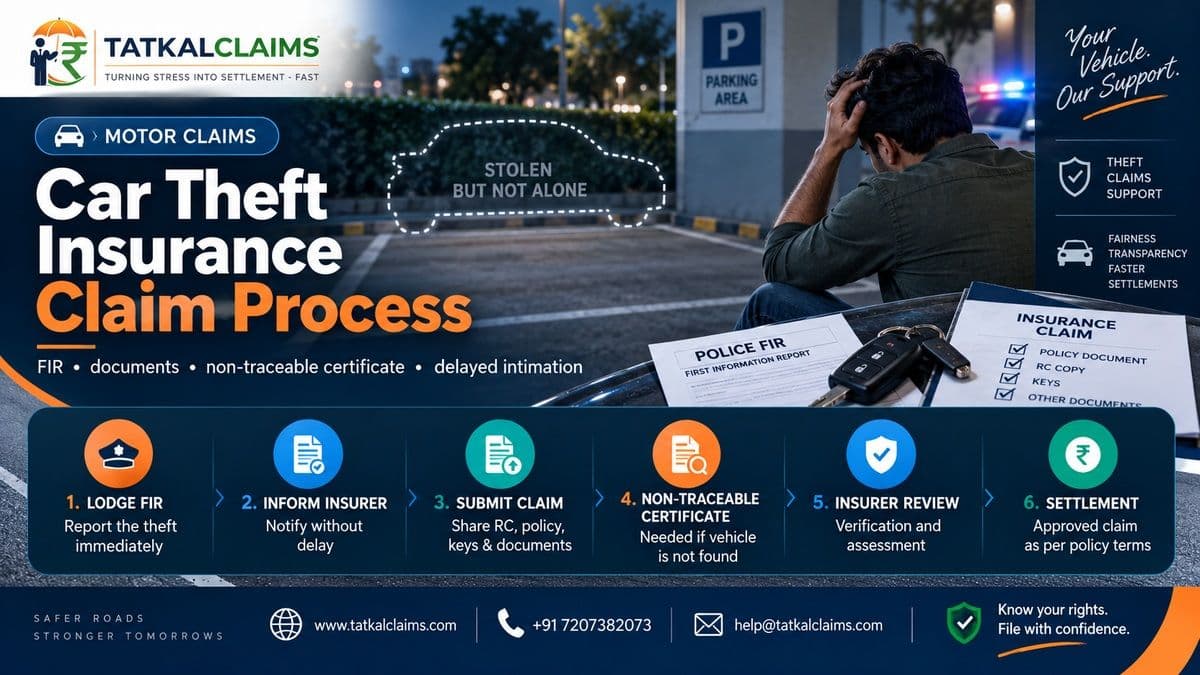
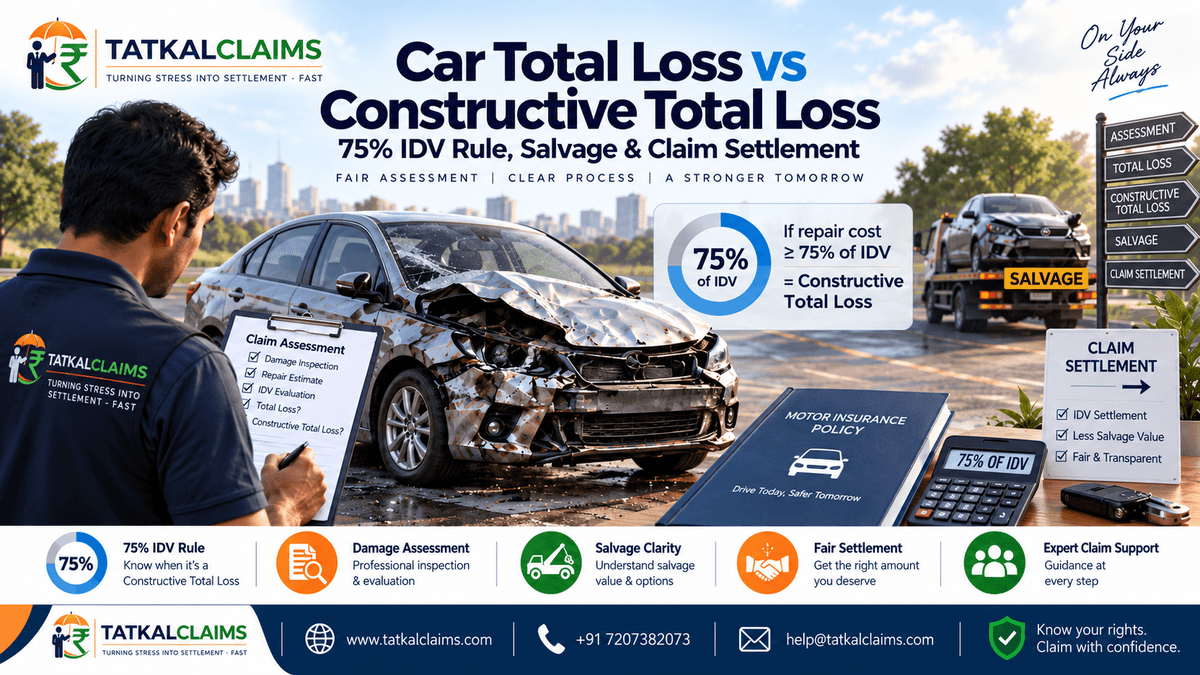
Two evergreen guides are especially useful once a motor claim becomes serious: our stolen-car insurance claim process explains FIR, non-traceable certificate, keys and delayed intimation, while our car total-loss and constructive-total-loss guide explains IDV, the 75% threshold, salvage and settlement calculations.
Frequently asked questions
What is the car insurance claim settlement ratio in India?
There is no single car-only ratio that covers every insurer using one universal formula. IRDAI publishes standardized general-insurer claims data, while some insurers separately publish Motor Own Damage ratios. Check the scope and formula before comparing.
What is the IRDAI claim settlement ratio for car insurance?
IRDAI publishes claims statistics for general insurers, which include motor insurance but are not necessarily car-only. The table in this article uses IRDAI's percentage of claims paid within three months so the same metric can be compared across insurers and years.
Which car insurance company has the best claim settlement ratio?
There is no responsible way to name one insurer as best from CSR alone because definitions differ. Use a consistently defined ratio alongside coverage, IDV, exclusions, garage access, add-ons and the claim process.
What is ACKO's car insurance claim settlement ratio?
ACKO's own car-insurance page reports 99.10% for Overall Motor Own Damage for FY2023-24. Its separate IRDAI FY2024-25 insurer-wide figure for claims paid within three months is 99.98%. The two numbers use different scopes.
What is Shriram General's car insurance claim settlement ratio?
IRDAI's insurer-wide claims-paid-within-three-months measure shows Shriram General at 88.17% for FY2023-24 and 89.32% for FY2024-25. Those figures should not be described as a motor-only rejection or approval rate.
Before You Choose a Car Insurer: 5 Practical Takeaways
- Do not compare claim-settlement percentages unless the definition and period are comparable.
- Treat IRDAI data as a historical benchmark, not a prediction of your own claim.
- Compare similar IDV, deductibles and add-ons when comparing premiums.
- Check nearby cashless garages and read the exclusions before paying.
- Keep policy and claim documents organised from day one; they matter far more in a dispute than an advertised percentage.
Even with the best car insurance, claim rejections and delays can still happen for various reasons. If you are facing an issue with your car insurance claim, do not fight alone. At Tatkal Claims, our team of claim experts specializes in helping policyholders navigate claim disputes, rejections, and delays. We understand the complexities of insurance contracts and the tactics insurers sometimes use to avoid payouts. Let us help you get the settlement you deserve. Visit Tatkal Claims today to know your rights and get expert assistance.
Disclaimer: This article is for general information only and is not legal, financial or insurance-purchase advice. Policy terms, insurer disclosures and regulatory requirements can change; verify the latest policy wording and official IRDAI or insurer information before acting.