Pregnancy can complicate a health-insurance claim even when the hospitalisation is for an illness that is medically separate from pregnancy. A woman may be admitted for gastroenteritis, dengue, pneumonia, an injury, a cardiac condition or another illness while she happens to be pregnant. The central question is not simply whether she was pregnant, but what actually caused the hospitalisation and whether the exclusion cited by the insurer genuinely applies to that treatment.
Why Pregnancy Can Create a Claim Dispute
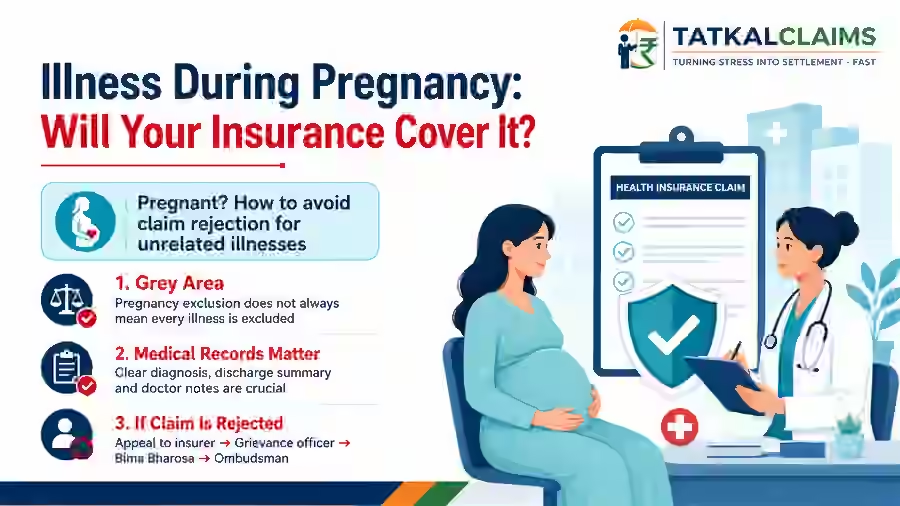
Many health policies contain maternity or pregnancy-related exclusions unless maternity benefits are specifically covered. The grey area begins when a pregnant policyholder needs treatment for a different illness. If symptoms overlap with pregnancy, or the hospital records are unclear about the cause of admission, an insurer may try to connect the treatment to the pregnancy exclusion.
A useful way to analyse the claim is to separate two questions: what does the policy actually exclude, and what do the medical records show was actually being treated?
What the Maternity Exclusion Actually Requires You to Check
IRDAI's health-insurance framework treats exclusions as specific conditions, treatments, services or situations that are outside cover. In practice, maternity exclusions commonly address expenses connected with childbirth and specified pregnancy-related treatment. The exact wording in your own policy is what matters.
If the insurer cites a maternity exclusion but the hospital records show treatment for an independent illness, the key question is whether that expense actually falls within the wording of the exclusion—not merely whether the patient was pregnant.
Why the Diagnosis Matters More Than the Fact of Pregnancy
Pregnancy can merely coexist with an illness, contribute to it, aggravate it or directly cause it. Those are medically different situations. Acute gastroenteritis caused by an infection, for example, is not the same diagnosis as hyperemesis gravidarum, even though both can involve severe vomiting in a pregnant patient.
Two consumer decisions illustrate the distinction. In P. Iniya v. Star Health and Allied Insurance Co. Ltd., the District Consumer Disputes Redressal Commission, Chennai (South), examined a claim for treatment of acute gastroenteritis during pregnancy. The Commission noted that the discharge summary showed treatment for acute gastroenteritis and held that the maternity exclusion relied on by the insurer was not applicable to that unrelated treatment. The complaint was partly allowed and reimbursement was directed. This was a District Commission decision and is fact-specific, not a universal rule.
The opposite outcome arose in United India Insurance Co. Ltd. v. Shikha Garg. There, the Punjab State Consumer Commission relied on the discharge-summary diagnosis of hyperemesis gravidarum, treated it as a pregnancy complication, and held that the policy's pregnancy exclusion applied. The case reinforces the same practical point: the diagnosis and its medical link to pregnancy can determine whether the exclusion fits.
The Medical Paper Trail Can Make or Break the Claim
When pregnancy and another illness overlap, hospital records become especially important. Insurers may examine admission notes, investigation reports, prescriptions, treating-doctor notes and the discharge summary to decide what actually caused the hospitalisation.
- Admission notes and the stated reason for hospitalisation.
- The principal and final diagnosis recorded by the treating doctor.
- Investigation reports and test results supporting that diagnosis.
- Prescriptions and treatment records showing what condition was actually treated.
- The discharge summary, including the course of treatment and final diagnosis.
- Any medically accurate clarification explaining whether the illness was independent of pregnancy.
Check the Discharge Summary Before Leaving the Hospital
A genuine factual error in a discharge summary can later become a claim problem. Before leaving the hospital, check whether the diagnosis, reason for admission and treatment details accurately reflect the treating doctor's findings.
If an error is found, ask the hospital to correct it through its proper medical-record process. Records should never be altered merely to obtain insurance coverage; the objective is accuracy, not claim engineering.
A Treating Doctor's Clarification Can Be Crucial
If an insurer later links an unrelated illness to pregnancy, a focused clarification from the treating doctor can be valuable. Where medically correct, the doctor can explain the diagnosis, why hospitalisation was necessary, whether pregnancy merely coexisted with the illness, and whether the treatment was directed at an independent condition.
A generic certificate saying only that admission was necessary may be less useful than a medical note that directly addresses the insurer's stated reason for rejection.
What IRDAI Requires When a Health Claim Is Repudiated
IRDAI's 2024 Master Circular on Health Insurance Business requires repudiation or partial disallowance of a claim to be communicated with reference to the specific terms and conditions of the policy. This makes the insurer's written reason important: the cited clause should be compared with the diagnosis and the actual treatment received.
A broad statement such as “pregnancy not covered” should therefore be read alongside the precise policy wording and the medical evidence. The insurer's conclusion and the hospital record should logically connect.
Maternity Waiting Period and an Unrelated Illness Are Different Questions
A health policy can contain different waiting periods for different risks, including maternity benefits, pre-existing diseases, specified conditions and initial illness periods. The fact that maternity benefits have not completed their waiting period does not by itself determine whether an otherwise covered independent illness is payable.
The unrelated illness should be tested against the clauses that actually apply to that illness, while the maternity exclusion or maternity waiting period should be applied only where the treatment falls within its scope.
Tatkal Claims Checklist: Pregnant and Hospitalised for an Unrelated Illness?
- Check the principal diagnosis before discharge.
- Read the discharge summary and ensure it accurately states why you were admitted.
- Preserve investigation reports, prescriptions and treating-doctor notes.
- Ask whether the illness was medically independent of pregnancy, where that distinction is relevant.
- Read the exact maternity or pregnancy-related exclusion in your own policy.
- If the insurer disputes the claim, compare its cited clause with the diagnosis and treatment records.
Frequently asked questions
Can health insurance cover an illness that occurs while I am pregnant?
Potentially, yes. Pregnancy by itself does not establish that every illness is pregnancy-related. Coverage depends on the policy wording, the diagnosis, applicable waiting periods and exclusions, and the medical cause of the treatment.
What if my policy does not include maternity cover?
A maternity exclusion may apply to treatment that actually falls within that exclusion. A separate illness occurring during pregnancy still needs to be assessed against the clauses relevant to that illness and the supporting medical evidence.
Why is the discharge summary so important?
Insurers rely heavily on hospital records when assessing claims. If the discharge summary is unclear about the principal diagnosis or the reason for hospitalisation, it can create a dispute over whether the treatment was pregnancy-related.
What should a doctor's clarification explain?
Where medically appropriate, it should explain the diagnosis, why hospitalisation was necessary, and whether the condition being treated was independent of pregnancy or was caused or complicated by pregnancy.
Does being pregnant automatically convert an unrelated illness into a maternity claim?
No. The fact of pregnancy and the medical cause of hospitalisation are separate questions. The insurer must assess the treatment against the actual terms of the policy.
The Key Distinction
An illness occurring during pregnancy and an illness occurring because of pregnancy are not necessarily the same thing. For a disputed claim, the strongest evidence is usually documentary: the exact policy exclusion, the principal diagnosis, the medical timeline and the treating records showing why hospitalisation was required.
The policy wording comes first—but the hospital record often determines how that wording is applied.
Research Basis
This Tatkal Claims explainer was independently developed from The Times of India article “Illness during pregnancy: Will your insurance cover it?” by Preeti Kulkarni. The analysis was further cross-checked against IRDAI's 2024 Master Circular on Health Insurance Business and the consumer decisions cited above. This article does not reproduce the newspaper report and should not be treated as medical or legal advice.