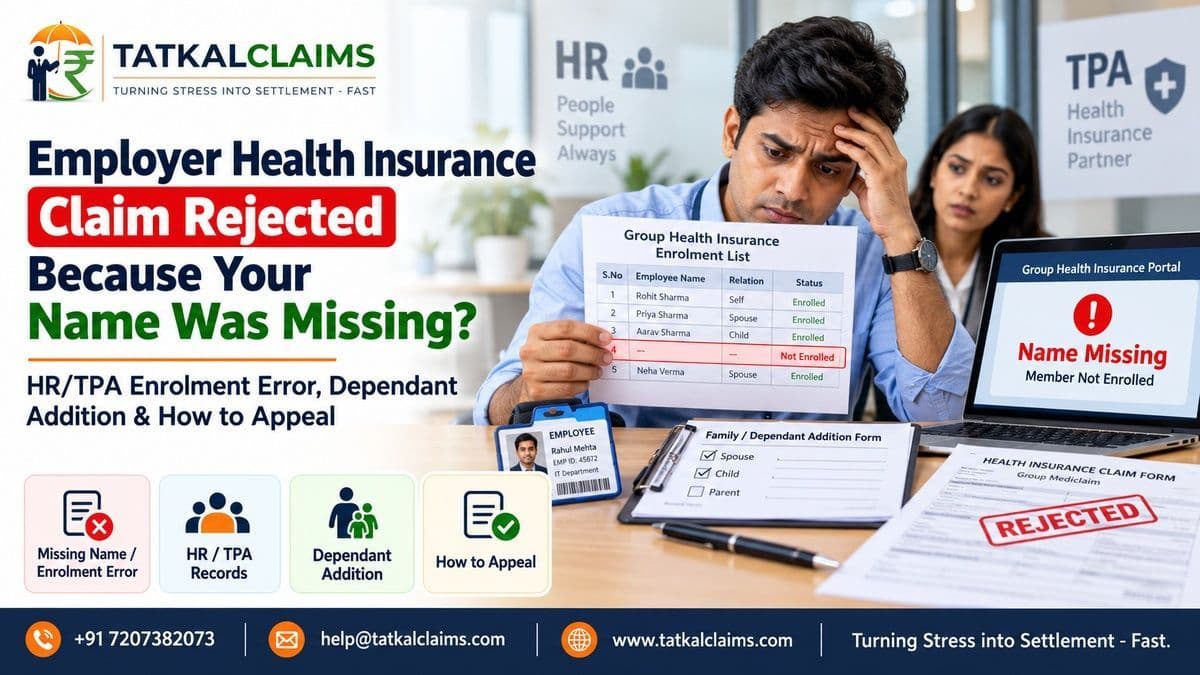
You join a company and HR tells you that you have family health insurance from day one. You submit your spouse’s details. Two months later your spouse is hospitalised, but the TPA says: “Member not found.” HR says it was a system mistake. The insurer says the dependant was never endorsed into the policy.
This is not the same problem as a normal medical rejection. The first dispute is whether the person was actually an insured member of the employer’s group policy on the date of treatment.
A strong appeal therefore starts with enrolment evidence: what the employer promised, what details you submitted, what the employer sent to the insurer or TPA, whether the insurer accepted the addition, whether premium was accounted for, and whether an endorsement/member record was created.
Written by: Tatkal Claims, Claims Review Team
Reviewed by: Ankit L Kanoi, Founder
What This Guide Covers
This guide covers employer/group health claims rejected because the employee or dependant was allegedly not enrolled, not active, missing from the insurer database, added late, added with the wrong effective date, or never formally endorsed.
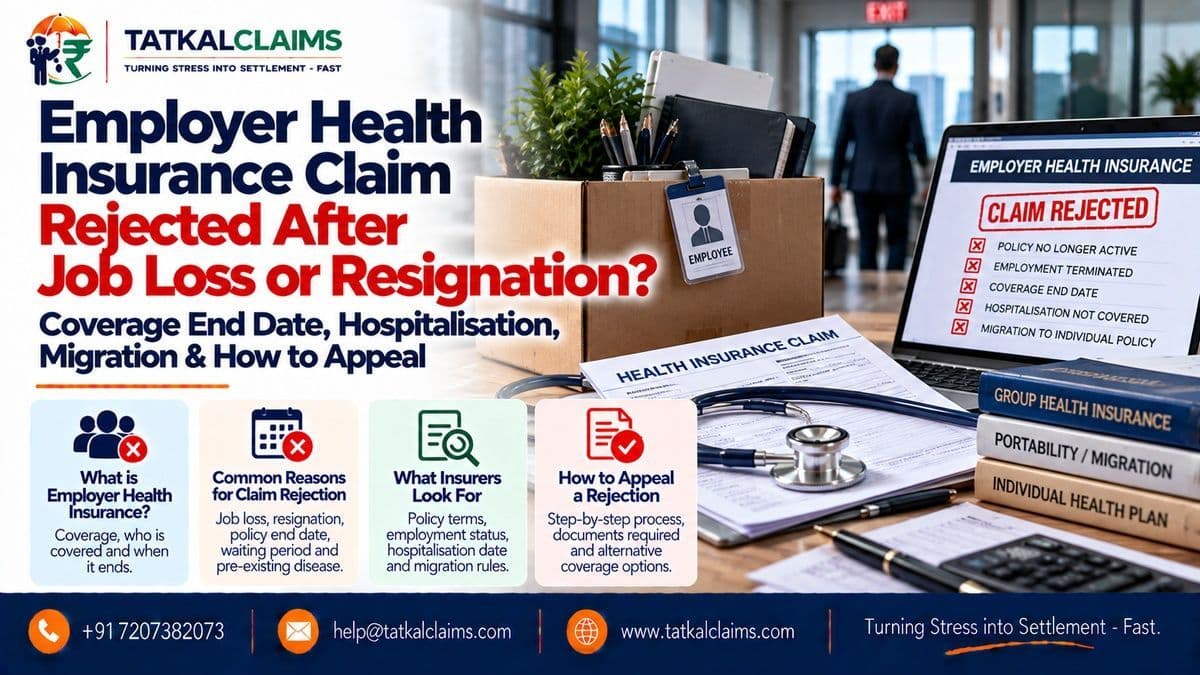
It is different from a claim rejected because employment had already ended. If your dispute is about resignation, last working day or deletion after leaving the company, use our separate job-loss guide.
See: Employer Health Insurance Claim Rejected After Job Loss or Resignation.
How Group Health Enrolment Usually Works
The employer or other master policyholder buys the group policy and administers employee/member additions and deletions with the insurer or TPA.
Current group-health materials show that additions are handled through policy servicing or endorsements. Care’s current Group Care wording says a mid-term insured member may be added only after the insurer accepts the application, receives the additional proportionate premium and issues an endorsement confirming the addition.
Niva Bupa’s current corporate explainer similarly describes an additive endorsement as the mechanism used to add a new employee or dependant to a group health policy.
HDFC ERGO’s current Group Health wording also treats addition of insured persons as a financial endorsement and requires supporting documents for specified mid-term additions such as newborn babies or newly married spouses.
| Step | What should exist |
| Employee becomes eligible | HR benefits rule / joining record |
| Employee submits details | Portal submission / email / form |
| Employer sends addition request | Insurer/TPA upload or endorsement request |
| Insurer accepts addition | Processing/acceptance record |
| Premium adjustment if applicable | Debit/credit/premium statement |
| Member added to policy | Endorsement/member schedule/database |
| Employee receives proof | E-card, certificate/CIS or portal status |
Common Enrolment-Error Scenarios
- New employee joined but HR never sent the addition request.
- HR sent the employee data but the insurer/TPA upload failed.
- Employee is enrolled but spouse, child or parent was omitted.
- Dependant addition was submitted but required proof was never completed.
- The insurer accepted the member, but the TPA database was not updated.
- The TPA showed the member active, but the insurer later says no endorsement existed.
- The effective date recorded by the insurer is later than the date promised by HR.
- A newborn or newly married spouse was added after the event, creating a dispute over retrospective cover.
Employee Was Eligible From Joining Date but HR Forgot to Add Them
This creates two separate questions. First: did the insurance contract actually cover the employee on the treatment date? Second: if not, did the employer fail to provide a promised employee benefit?
The insurer may have a defensible coverage position if the person was never accepted or added under the policy process. But that does not necessarily end the matter between employee and employer.
Ask HR for the group policy eligibility rule, the employee census or enrolment file, the date the employee was submitted to the insurer and any correction request made after the claim.
Spouse, Child or Parent Was Missing From the Policy
Dependants often require a separate enrolment step even when the employee is already insured.
The employee should preserve the dependant submission form, portal screenshot, HR acknowledgement, relationship documents and any e-card or member ID generated.
If the employer says the dependant was successfully added, ask for the insurer-side endorsement or member-addition confirmation—not only the HR portal status.
If the insurer says additional documents or premium were missing, ask when that deficiency was communicated and to whom.
Newborn Baby Addition: Timing Can Be Critical
Many group policies have special rules for newborn additions, maternity-linked newborn cover or mid-term family additions. These rules can differ substantially between employer schemes.
HDFC ERGO’s current group wording lists addition of a newborn baby as a financial endorsement and requires a proposal/application with the birth certificate in the relevant circumstances.
Do not assume that a baby is automatically a named insured merely because the mother had maternity cover. Check whether the group schedule contains newborn-from-birth cover, a defined notification window, or a requirement for formal addition.
If the claim arose before HR completed the addition, ask whether the master policy contains any automatic newborn benefit before concluding the child was uninsured.
Spouse Added After Marriage
A newly married spouse can also become a mid-term endorsement issue.
If the employer benefit says spouse cover starts from marriage or from the date documents are submitted, compare that promise with the insurer’s endorsement effective date.
If HR delayed processing the marriage certificate, preserve the submission timestamp and every follow-up before the hospitalisation.
Does an E-Card Prove Coverage?
An e-card is strong practical evidence that the insurer or TPA treated the person as a member. But it may not be conclusive if the insurer later shows that the card was generated from erroneous or provisional data.
The opposite is also true: absence of an e-card does not automatically prove there was no insurance if the insurer’s endorsement/member schedule shows the person was active.
For a disputed claim, compare all three: insurer endorsement/member record, TPA eligibility record and e-card/certificate.
| Evidence | What it helps prove |
| Insurer endorsement / member schedule | Formal member addition and effective date |
| Insurer eligibility database | Operational insured status |
| TPA member record | Claims/cashless servicing status |
| E-card / member ID | Member-facing evidence of enrolment |
| HR benefits portal | Employer-side representation |
| Employee submission acknowledgement | What details were provided and when |
TPA Says “Not Enrolled”, HR Says “You Are Covered”
Do not remain trapped between HR and the TPA. Ask each party for a specific record.
The TPA should identify the member status and effective date in its system. HR should provide the addition request and transmission date. The insurer should confirm whether the member was accepted and endorsed.
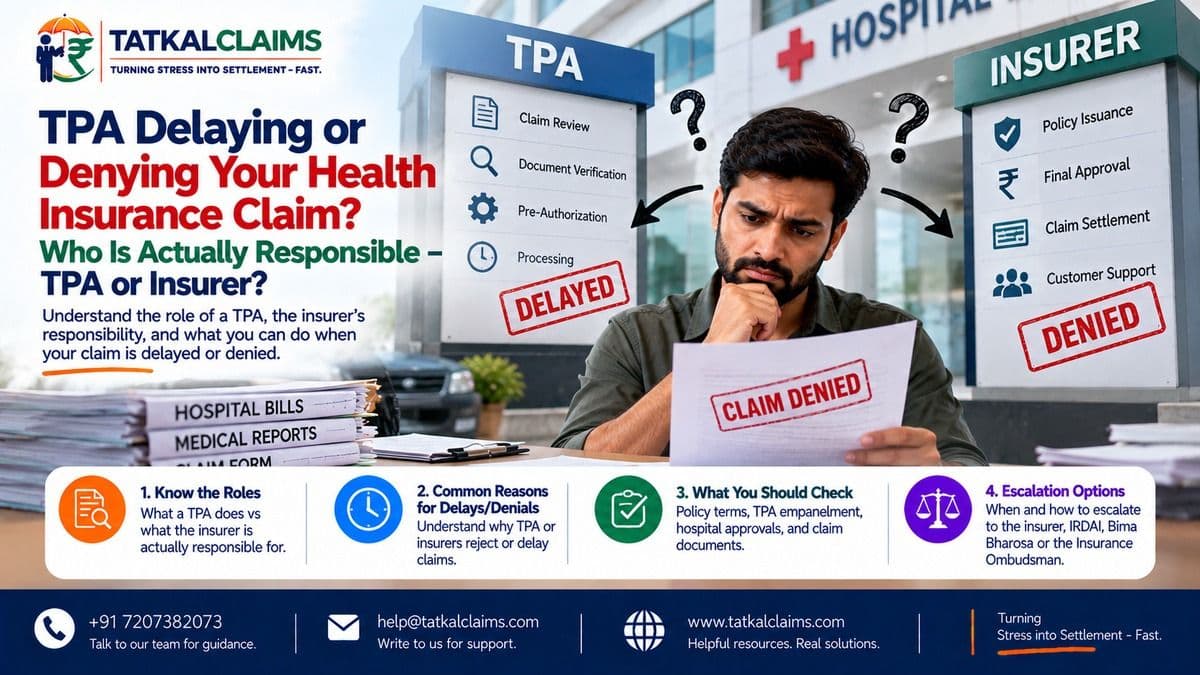
If the insurer and TPA keep sending you back to each other, see our TPA Delay or Denial guide.
A TPA administers claims; it is not a substitute for the insurer’s final coverage position. Ask for a written insurer decision where membership itself is disputed.
Can HR or the Insurer Backdate the Enrolment After the Claim?
Sometimes HR discovers the omission only after hospitalisation and asks the insurer to add the employee or dependant retrospectively.
Do not assume retrospective enrolment is automatically permitted. It depends on the group policy, the employer-insurer arrangement, premium accounting, underwriting/service rules and whether the insurer actually accepts the correction.
If the insurer agrees to a retrospective endorsement, obtain the written effective date before relying on verbal confirmation.
If the insurer refuses to backdate the addition, ask HR whether it accepts responsibility for failing to enrol the eligible member.
Does Payroll Deduction or Employer Premium Payment Prove Cover?
A payroll deduction or employer-funded premium can support the employee’s case, but it does not always prove that the specific person or dependant was successfully added to the insurer’s member schedule.
In group insurance, premiums may be adjusted on an aggregate or periodic basis. The useful evidence is the member-wise addition/deletion record and endorsement trail.
If the employee paid an optional top-up or dependant contribution but the dependant was never enrolled, keep the payslip and deduction records because they may be important to the employer-benefit dispute.
Wrong Effective Date: Added, but Too Late
Another common dispute is not whether the member was added, but when cover began.
The employee may submit dependant details on 1 July, HR may process them on 10 July, the insurer may endorse cover from 15 July, and hospitalisation may occur on 12 July.
The appeal must therefore identify the rule for effective date: date of eligibility, date of request, date of insurer acceptance, date of premium receipt or another date specified in the master policy.
Cashless Was Approved Even Though the Insurer Later Says the Member Was Missing
A prior cashless authorisation can be powerful evidence that the TPA or insurer treated the patient as eligible at that time.
It is not necessarily a final guarantee of coverage, but a later reversal should be explained.
Ask what member record the TPA relied on when it approved cashless, when that record changed, and whether the insurer is alleging a clerical error, invalid enrolment or later cancellation.
Preserve every pre-authorisation, enhancement and discharge communication.
Why the Certificate of Insurance / CIS Matters
IRDAI’s current Health Department FAQ says a Customer Information Sheet should be provided to members of group insurance policies.
The CIS is useful because it identifies core coverage information, claims procedure and policy servicing information in simpler form.
If the employee says no certificate, CIS or member proof was ever issued despite being told cover existed, include that fact in the grievance. It does not by itself create coverage, but it helps show the quality of policy servicing and communication.
Documents to Collect Before Appealing
| Document | Why it matters |
| Offer letter / HR benefits policy | Shows promised eligibility |
| Joining date / confirmation record | Shows employee status |
| Dependant enrolment form / portal screenshot | Shows what was submitted |
| HR acknowledgement | Shows employer received the request |
| Employer-to-insurer addition file | Shows transmission date |
| Insurer endorsement/member schedule | Shows formal addition/effective date |
| Premium/debit-credit statement | Supports addition accounting |
| TPA eligibility record | Shows servicing status |
| E-card / certificate / CIS | Member-facing coverage evidence |
| Cashless authorisation | Shows eligibility treatment at claim stage |
| Rejection letter | Exact reason for denial |
| Correction/backdating request | Post-error remediation trail |
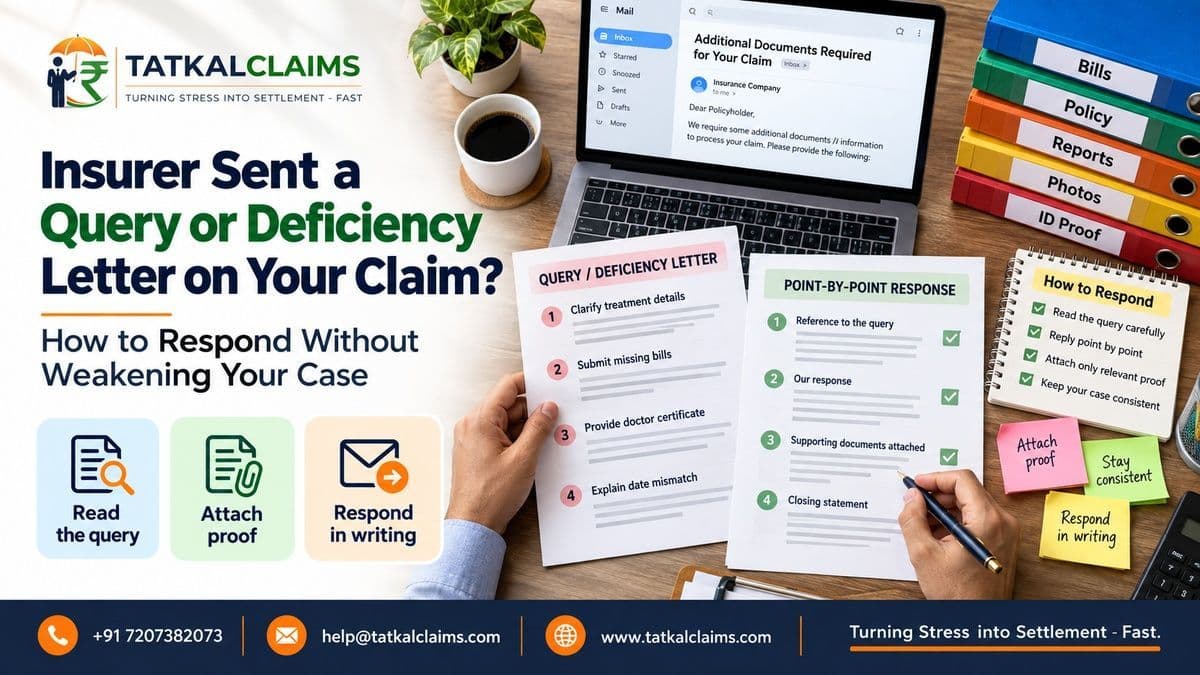
If the insurer sends repeated enrolment-document queries, use our claim query and deficiency-letter response guide to answer each request against a dated index.
Stronger Grounds for Challenging the Rejection
- The insurer or TPA issued an e-card/member ID and accepted the person as active before treatment.
- The employer’s addition file shows the member was submitted before hospitalisation and the insurer accepted or processed that file.
- An endorsement exists with an effective date covering the treatment, but the TPA database was not updated.
- Cashless was approved using an active member record and the later rejection gives no coherent explanation for the reversal.
- The insurer uses a later effective date than the endorsement or accepted addition record.
- A newborn or spouse benefit in the master policy provides automatic/interim cover that the rejection ignored.
- The insurer says no premium was received even though the endorsement/premium adjustment record shows otherwise.
Grounds That Are Usually Harder to Challenge Against the Insurer
- HR promised cover but never sent the addition request to the insurer.
- The dependant was never included in the employer’s submitted member data.
- Required relationship/birth/marriage documents were never provided under the applicable addition process.
- The insurer expressly rejected or never accepted the addition before the medical event.
- The employee relies only on an HR portal or payroll deduction, while insurer records consistently show no member addition.
- The requested retrospective addition is not permitted or was never accepted under the employer-insurer arrangement.
A weaker insurer claim may still leave a separate employer-benefits issue. Keep those arguments distinct.
How to Appeal a Group Health Claim Rejected for Missing Enrolment
- Ask the insurer/TPA for the member-status record and exact effective date used to deny the claim.
- Ask HR for the original addition request, upload file or portal transmission showing when your or your dependant’s data was sent.
- Obtain the insurer endorsement/member schedule and any premium adjustment connected to the addition.
- Build a timeline from eligibility date to submission, insurer acceptance, e-card generation, hospitalisation and rejection.
- If the TPA record conflicts with the insurer record, ask the insurer for the final written coverage position.
- If cashless was previously approved, attach all authorisations and ask why eligibility was later reversed.
- If HR admits an enrolment mistake, obtain that admission in writing and ask whether it has requested correction/backdating from the insurer.
- Escalate a clause- and evidence-specific grievance if the insurer’s rejection conflicts with its own endorsement/member records.
If the insurer maintains the rejection after grievance, compare the available escalation routes in our Bima Bharosa vs Insurance Ombudsman guide and verify current jurisdiction before filing.
Questions to Put to HR, TPA and the Insurer
| 1 | On what date did I become eligible under the employer scheme? |
| 2 | On what date did HR submit my/member dependant details to the insurer or TPA? |
| 3 | Was the addition accepted, rejected or left pending? |
| 4 | What endorsement/member schedule shows the effective date? |
| 5 | Was additional premium required, and if so when was it received? |
| 6 | Why did the TPA/e-card show active if the insurer says the member was never enrolled? |
| 7 | If the effective date was delayed, which rule or clause determined that date? |
| 8 | If HR made an error, has the insurer been asked to correct/backdate the enrolment? |
| 9 | If a newborn/spouse is involved, does the master policy provide any automatic or interim cover? |
| 10 | Please provide the final reasoned rejection with the member record and policy clause relied upon. |
How Tatkal Claims Can Help
Tatkal Claims can review the employer benefits promise, employee/dependant enrolment submission, insurer/TPA member records, endorsements, e-card, cashless approvals and rejection letter to identify where the enrolment chain failed.
Where the evidence supports a challenge, assistance can include reconstructing the effective-date timeline, testing a TPA-versus-insurer mismatch, organizing proof of member addition and preparing a clause-specific grievance. We cannot promise payment: if the insurer genuinely never accepted the member and no automatic group-policy cover applies, the insurance rejection may be sustainable even if the employer separately failed to provide the promised benefit.
Frequently Asked Questions
Frequently asked questions
Can an employer health claim be rejected because my name is missing from the insurer database?
Yes, membership is fundamental to group cover. But ask whether the problem is only a TPA/database error or whether the insurer genuinely never accepted and added you to the policy.
HR says I was covered from day one. Is that enough?
Not necessarily. HR eligibility is important evidence, but the insurance contract may also require formal member addition, insurer acceptance, premium adjustment or an endorsement.
Does an e-card prove that I am insured?
An e-card is strong evidence of enrolment, but it may not be conclusive if the insurer proves it was generated from incorrect or provisional data. Compare it with the insurer endorsement/member schedule.
What if my spouse was omitted even though I submitted the details?
Obtain the submission acknowledgement, employer-to-insurer addition request, insurer processing result and endorsement. The key question is where the enrolment chain failed.
Is a newborn automatically covered under my employer policy?
Not in every group policy. Some schemes provide newborn or maternity-linked cover, while others require formal addition within a stated period. Apply the master policy and endorsement rules.
Can HR add me retrospectively after a claim?
Only if the insurer and employer arrangement permit it and the insurer actually accepts the retrospective effective date. A verbal HR promise is not enough.
What if the TPA says I am not enrolled but the insurer issued an endorsement?
The insurer endorsement is critical evidence. Ask the insurer to correct the TPA record and issue the final claim decision based on the endorsed membership.
What if cashless was approved before the insurer said I was not covered?
Preserve the cashless authorisation and ask which eligibility record was used. A later reversal is possible, but the insurer should explain the inconsistency.
Can I claim against my employer if HR forgot to enrol me?
That can become a separate employment/benefits issue depending on what the employer promised and the facts. The insurer dispute and employer responsibility should be analysed separately.
What is the strongest appeal format for a missing-member rejection?
Use a dated enrolment file: eligibility date, employee submission, HR transmission, insurer acceptance, endorsement effective date, e-card/TPA status, hospitalisation and rejection, with each inconsistency answered against documents.
Sources & Methodology
Primary-source and current insurer-source review checked on 30 September 2026. Employer group-health schemes are negotiated and can differ materially on eligibility, dependant classes, member-addition windows, effective dates and retrospective corrections. This guide therefore treats insurer examples as illustrations and applies the actual master policy, member schedule, endorsement and employer-insurer arrangement to a live claim.
Disclaimer: This guide explains employer/group health insurance disputes involving missing or incorrect member enrolment in India in general terms. Employer eligibility, member-addition processes, dependant classes, effective dates, premium adjustments, e-cards, endorsements, retrospective corrections and TPA records vary by master policy and employer-insurer arrangement. An HR promise or portal entry does not automatically establish insurer liability, and an insurer database error does not automatically defeat valid endorsed coverage. Apply the master policy, Certificate/CIS, member schedule, endorsement and enrolment records for the specific claim. This is not legal, employment or financial advice for a particular case.