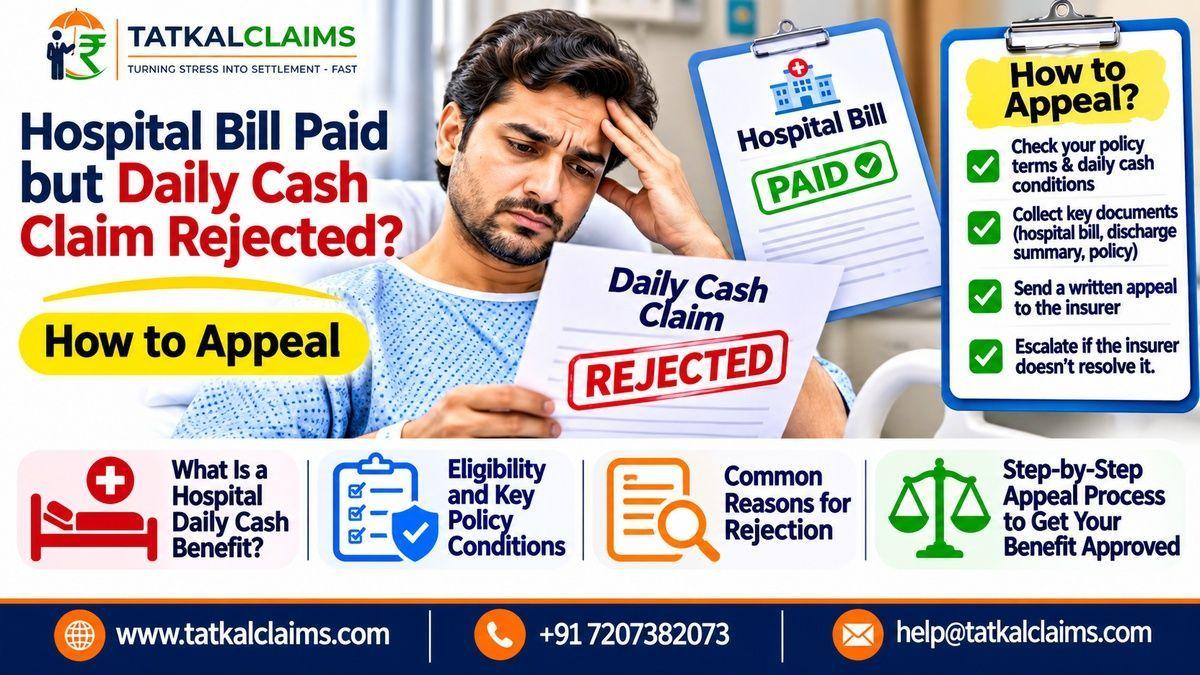
Your health insurer settles the bill for a day-care procedure. It may pay the hospital directly or reimburse you after you pay. A week later, the insurer that sold you ₹2,000 a day in hospital cash declines the benefit because the stay lasted seven hours. Open the second policy’s schedule and rejection letter. The question is whether the admission triggered the fixed benefit you bought.
Why One Insurer Can Pay and the Other Can Refuse
An indemnity health policy pays admissible treatment costs. With cashless settlement, the insurer pays the hospital directly. With reimbursement, you pay the bill and the insurer reimburses eligible expenses. A fixed-benefit policy pays the amount specified for a qualifying event. Hospital daily cash may be a standalone policy, an add-on or part of group cover. Check the schedule or certificate issued for the insured person to see which benefit applies.
IRDAI’s health insurance master circular allows policyholders to claim from all applicable benefit policies when the insured event occurs. Each contract determines whether that event qualifies. The first insurer’s cashless settlement confirmation or reimbursement statement can help establish the admission and treatment. The daily cash insurer assesses the claim against its own benefit, limits and exclusions.
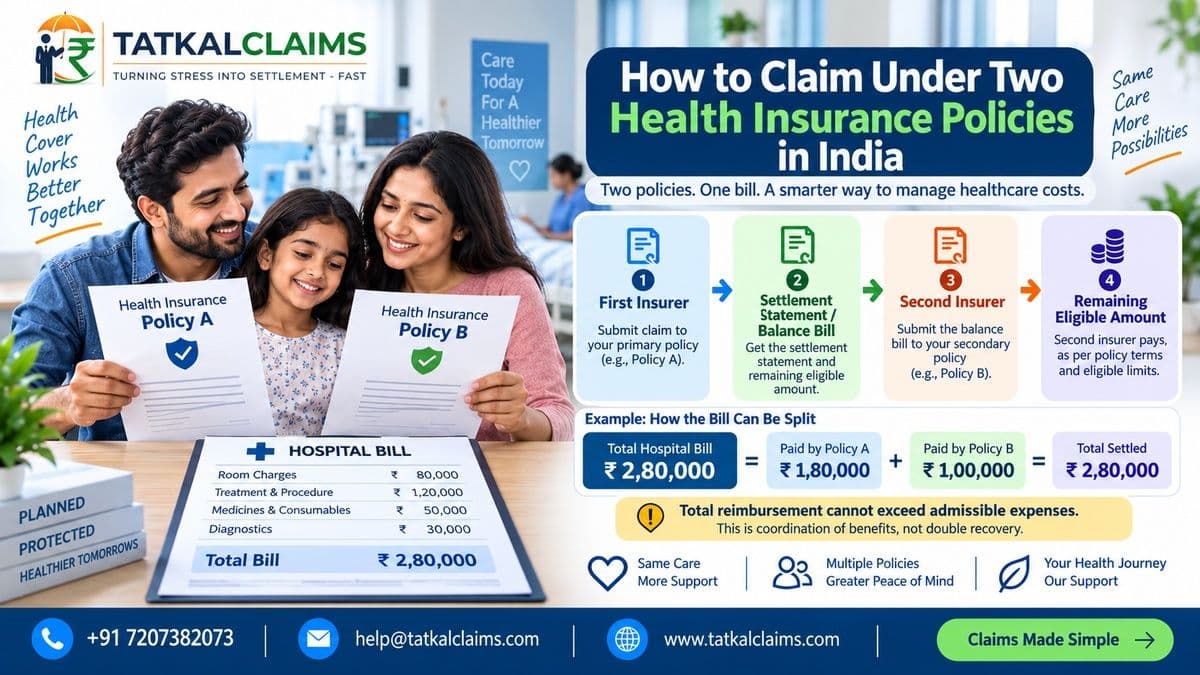
For how two indemnity policies coordinate the hospital bill, see the guide to claiming from two health insurance policies.
What Does the Daily Cash Rejection Letter Actually Say?
| Insurer’s reason | Check this first | Evidence to send |
|---|---|---|
| Stay was too short | The qualifying duration and both timestamps. Check any shorter-stay provision or separate day-care benefit. | Admission and discharge records with dates and times |
| Day-care procedure was outside the benefit | The procedure name, any covered list and whether day-care cash was included in your plan. | Procedure or operation note and schedule or certificate |
| Only one or two days were paid | The completed periods, any day deductible or franchise, and remaining days under the cap. | The insurer’s calculation and your hospital timeline |
| ICU uplift was refused | The ICU benefit terms, time actually spent there and any cap or restriction on combining benefits. | ICU transfer and step-down times or a certified bed-movement record |
| Admission was excluded or fell within a waiting period | The policy start date, illness or accident clause and the exclusion cited. | Schedule, continuity records and the relevant clinical notes |
| Hospital or inpatient admission did not qualify | How the policy defines a hospital, inpatient care or observation. | Admission order, ward records and facility evidence where relevant |
When the letter says only “policy terms not met,” ask for the clause number, the policy wording applicable on the admission date and the factual finding behind the decision. IRDAI’s health master circular requires details with reference to specific policy terms for repudiation or partial disallowance.
How to Count Hospital Hours and Payable Days
Use recorded inpatient admission and discharge times as your starting point. Where the insurer uses a different start or end time, ask why. The casualty registration, formal inpatient admission, discharge order and billing closure can have different timestamps. Ask the hospital to clarify a discrepancy in writing with reference to its contemporaneous records.
| Recorded period | Elapsed time | Completed 24-hour periods |
|---|---|---|
| Monday 9 am to Monday 4 pm | 7 hours | 0 |
| Monday 8 pm to Tuesday 6 pm | 22 hours | 0 |
| Monday 9 am to Tuesday 11 am | 26 hours | 1 |
| Monday 9 am to Wednesday 11 am | 50 hours | 2 |
These counts come before any minimum stay, deductible, franchise, special benefit or cap. Suppose your daily cash rate is ₹2,000 and the 50-hour stay meets every other condition. With no day deductible, two eligible periods would give ₹4,000. If that policy expressly deducts the first eligible day, one payable day would give ₹2,000. If the schedule uses the term “franchise,” ask how its qualifying threshold affects payment once reached. Use the calculation in your own wording.
For example, HDFC ERGO Optima Cash uses continuous completed 24-hour periods for sickness hospital cash. A standalone SBI General Hospital Daily Cash wording includes a clause that can treat a qualifying continuous stay of at least 12 hours and under 24 hours as 24 hours, subject to its deductible. SBI General’s Comprehensive Protection wording separately refers to a scheduled minimum stay and day deductible or franchise. Check the exact product and version issued to you. Under the claims-payment provision in Section D of that Optima Cash wording, a continuous stay shorter than 24 hours can count as 24 hours if it lasts at least 12 hours and covers the entire interval from 2:00 am to 3:30 am. This exception is product-specific and other benefit conditions still apply.
Worked Example: The Day-Care Bill Was Paid and Daily Cash Was Declined
Suppose a patient has a cataract procedure at 9 am and goes home at 4 pm. The indemnity insurer settles the eligible day-care bill through cashless payment or reimburses the patient after payment. The separate cash policy requires a completed 24-hour stay for ordinary sickness hospital cash. On the assumed facts, there are zero completed periods under that clause.
Now check whether the cash policy also includes a listed day-care procedure benefit. One Optima Cash wording reviewed for this guide lists cataract under a separate day-care procedure benefit. Where that benefit appears on the insured person’s schedule and the procedure meets its conditions, ask for review under that benefit and attach the procedure note. Where the policy offers only the ordinary benefit with a strict duration requirement, the decision turns on whether the stay met that requirement.
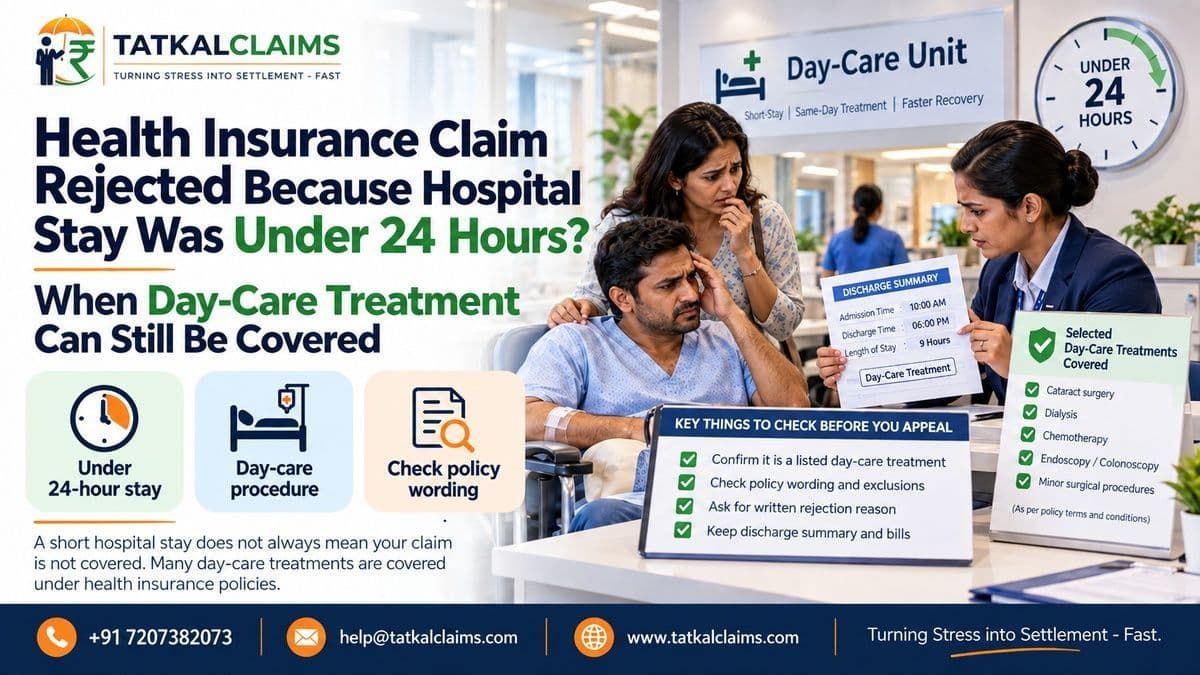
If your dispute is about the underlying hospital bill, see the day-care claim guide for stays under 24 hours.
When a Hospital Daily Cash Appeal Has Stronger Evidence
An appeal is stronger when the insurer used the wrong timestamp, assessed the wrong benefit, overlooked a shorter-stay rule or counted fewer payable days than the schedule allows. If the insurer excluded an eligible ICU period, provide the transfer records and ask how it applied the ordinary and ICU cash benefits to those hours.
A claim is harder to challenge when the stay falls below the applicable threshold and the contract provides no benefit for that procedure or admission type. A clear exclusion or a waiting period that applied on the date of treatment can also affect the claim. Ask for an explanation of the facts and dates the insurer used, especially if its wording or records differ from yours.
If the rejection says the facility failed the policy definition, see the guide to hospital registration and bed-count disputes.
Build the Appeal Around the Clause and the Hospital Timeline
- Download the daily cash policy schedule or group certificate, its wording and any endorsements. Highlight the benefit you claimed, the daily rate and the clause cited in the refusal.
- Request dated hospital records with the inpatient admission and discharge timestamps. Add the operation note for a day-care claim or bed-movement records for an ICU benefit.
- Write the insurer’s count next to your own and explain any difference. If another insurer settled the hospital bill, attach the cashless settlement confirmation or reimbursement statement as supporting evidence of the treatment.
- Send the appeal through the insurer’s grievance channel and keep the acknowledgement. Ask for a written decision citing the applicable clause and showing any payable-day calculation.
Sample Email to Challenge a Hospital Daily Cash Rejection
Subject: Reconsideration of hospital daily cash claim [claim number] under policy [policy number]
Your letter dated [date] cites [reason]. The attached hospital records show admission on [date and time] and discharge on [date and time]. My schedule lists [benefit name]. Please confirm which benefit was assessed and explain the start time, end time and qualifying periods used in your calculation.
Please review the attached [procedure note or admission records] under [relevant benefit or clause]. If a deductible, franchise, limit or exclusion applies, please identify the clause and explain how it affects this claim. Please acknowledge this grievance and send the decision in writing.
Where to Escalate if the Insurer Upholds the Decision
Start with the insurer’s Grievance Redressal Officer. Include the denial, policy schedule, exact clause and hospital records. If the response is unsatisfactory or the grievance is unresolved within the applicable period, you can use IRDAI’s Bima Bharosa portal. For eligible disputes, the Insurance Ombudsman is a separate route after you complain to the insurer. Check its response threshold, filing deadline and other eligibility requirements.
To choose between the two routes, see the Bima Bharosa and Insurance Ombudsman guide.
How Tatkal Claims Can Help
Tatkal Claims can compare your cash benefit schedule, hospital timeline and refusal letter, check how the insurer counted payable days and help prepare an appeal where the documents support it. Share both claim decisions if your hospital bill was paid under one policy and the cash benefit declined under another.
Frequently asked questions
Can I claim hospital daily cash after a cashless or reimbursement settlement?
Yes, if the event meets the terms of your daily cash cover. The first insurer’s settlement documents support the admission. Eligibility depends on the benefit you bought and the hospital records.
Does an overnight stay count as 24 hours?
Check the actual timestamps. An 8 pm admission followed by discharge at 6 pm the next day lasts 22 hours. Whether it qualifies depends on your clause and any exception.
How many days can I claim for a 50-hour hospital stay?
Under a clause that counts only complete 24-hour periods, 50 hours contains two complete periods. Apply the policy’s minimum stay, deductible or franchise and remaining benefit limits to work out any payable days.
Can the insurer pay daily cash for a same-day procedure?
Some plans include a separate benefit for specified procedures or a shorter-stay provision. Check your schedule and the procedure list, and attach the procedure note.
Can I use the first insurer’s settlement letter as evidence?
Include the cashless settlement confirmation or reimbursement statement as evidence of the admission and settlement. Send the second insurer the timestamped hospital records and the documents it needs to assess its own benefit.
What if the insurer used the wrong discharge time?
Ask it to identify the record it used, and obtain dated confirmation from the hospital based on the original records. Explain the effect on the qualifying duration or payable-day count.
Do I receive ordinary daily cash and an ICU amount for the same day?
That depends on your wording. Some benefits replace the ordinary rate for eligible ICU periods, while others specify an additional amount or a different limit. Ask for a calculation using the actual ICU entry and exit times.
Sources & Methodology
This guide uses IRDAI’s classification of health insurance and the health master circular, alongside examples from specific insurer wordings. The calculations and hospital scenarios are hypothetical. Use the schedule, terms and endorsements applicable to your policy and admission. This is general information. Claim outcomes depend on the contract and the evidence.