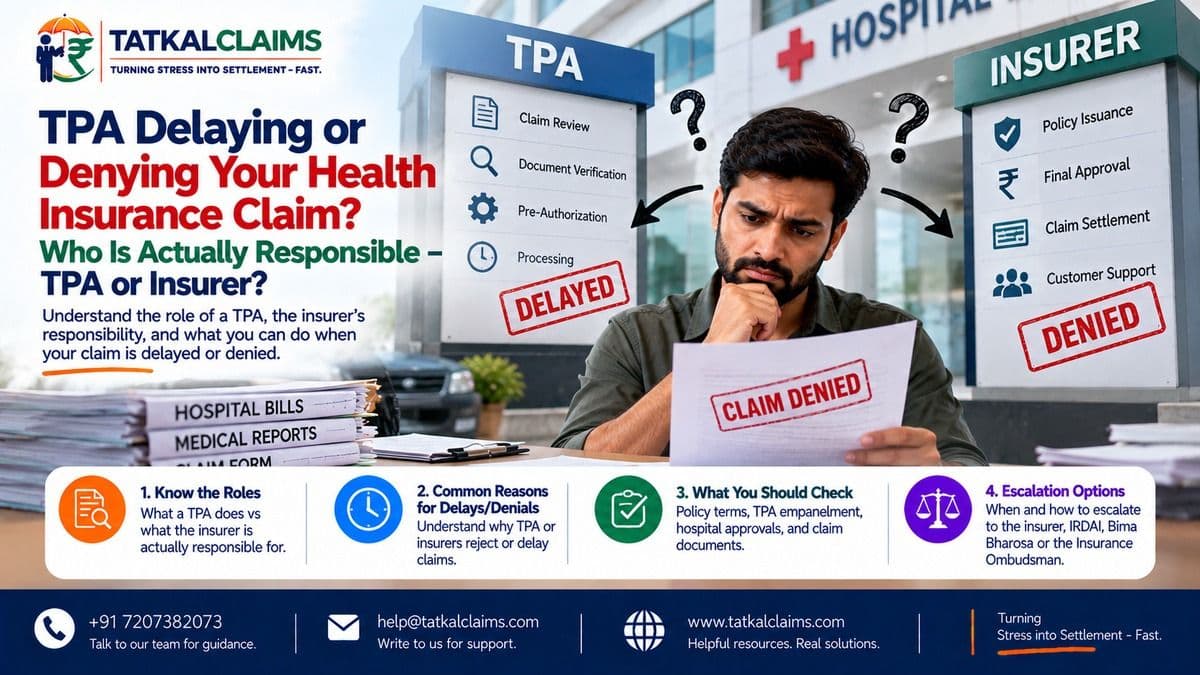

Your insurer or TPA has approved cashless treatment, but the hospital is still asking you to pay a deposit, advance or part of the bill. That does not automatically mean the hospital is wrong—and it does not automatically mean you should pay whatever is demanded.
The first question is what exactly has been approved. Under IRDAI's current health-insurance guidance, cashless payment is made directly to the hospital only to the extent of the cashless approval and subject to the policy terms. Expenses above policy limits or sub-limits, or expenses not covered by the policy, may still have to be settled directly by the patient.
A separate problem arises when a network hospital asks you for money that appears to duplicate the amount already authorized by the insurer. In that situation, the issue may be a pending enhancement, a mismatch between the hospital estimate and authorization, an internal hospital security-deposit practice, or a network-provider/SLA dispute that needs immediate escalation.
What “Cashless Approved” Actually Means
Cashless is a payment mechanism, not a promise that the patient will pay nothing. IRDAI's current policyholder guidance describes cashless as direct payment by the insurer to the empanelled hospital to the extent cashless approval is given.
That phrase—“to the extent cashless approval is given”—is crucial. A ₹1.5 lakh authorization against a ₹3 lakh hospital estimate is not the same as a ₹3 lakh full authorization. Likewise, even where the hospitalization itself is approved, the policy can still leave co-payments, deductibles, non-covered items, room-related differences or expenses above a sub-limit for the patient.
| Number | Where to get it | Why it matters |
| Hospital estimate | Hospital billing/insurance desk | Shows expected total cost at that stage |
| Current cashless authorization | Insurer/TPA authorization letter, portal, SMS/email | Shows what the insurer has actually approved so far |
| Patient-payable amount already identified | Hospital bill/insurer communication | May include co-pay, deductible, non-admissibles or sub-limit excess |
| Amount requested as deposit | Hospital's written demand/receipt | Lets you test whether the demand is a real gap or duplicates approved liability |
Ask for the Cashless Authorization Letter, Not Just a Verbal Confirmation
IRDAI introduced a standard cashless authorization format known as Part D so that the network hospital and the policyholder can see the authorization, package-rate information, extent of approval and related conditions. The 2019 circular also requires copies of supplementary/additional authorization and final approval to be notified to the policyholder.
Even where the insurer now provides authorization digitally rather than as a paper form, obtain a copy or screenshot showing the authorized amount, claim/pre-auth number, date and time, any package or room condition, any deductions already indicated and whether the approval is initial, enhanced or final.
| Field | Check |
| Approved amount | Exact rupee amount currently sanctioned |
| Type of approval | Initial pre-authorization, enhancement or final authorization |
| Hospital/network status | Hospital and branch/location match the actual admission |
| Procedure/diagnosis | Matches the treatment being taken |
| Package/room condition | Any agreed package rate or room-category restriction |
| Patient liability noted | Co-pay, deductible, excluded/non-admissible items or other conditions |
| Validity/conditions | Any time, document or treatment condition attached to approval |
When the Hospital May Have a Legitimate Reason to Ask You to Pay
There are situations where a patient payment can coexist with an approved cashless claim. The fact that money is requested does not by itself prove a violation.
| Reason | What to verify before paying |
| Co-payment | Percentage/amount written in the policy or endorsement |
| Deductible | Whether the policy requires you to bear the deductible before insurer liability begins |
| Sub-limit excess | Exact benefit limit and amount above it |
| Non-covered / non-admissible items | Itemised list and policy basis |
| Room upgrade / room-linked difference | Room entitlement and any valid related calculation |
| Bill above current authorization | Whether the hospital has sought an enhancement |
| Exhausted available sum insured | Current available cover after earlier claims, if relevant |
| Package outside authorization | Whether the treatment/hospital package exceeds the insurer-network agreed amount and who is contractually responsible |
IRDAI's policyholder guidance expressly states that expenses beyond limits or sub-limits allowed by the policy, and expenses not covered under the policy, have to be settled by the policyholder directly with the hospital. Current insurer claim guidance also commonly states that inadmissible expenses, co-payments and deductions remain patient-payable.
If the dispute is really about what the insurer has deducted or treated as non-admissible, use our health-insurance short-settlement and deductions guide.
The Most Common Gap: Hospital Bill Higher Than the Current Authorization
Cashless authorization is often issued in stages. The hospital may send an estimated cost at admission, receive an initial authorization, and later seek an enhancement if the treatment plan, length of stay or final bill increases.
If the hospital estimate is ₹4 lakh but the insurer has authorized ₹2 lakh so far, the hospital may be trying to secure the ₹2 lakh gap until enhancement is approved. Before paying, ask the hospital insurance desk whether an enhancement request has actually been sent and obtain its date, time and requested amount.
If no enhancement has been sent despite the hospital knowing the cost has risen, ask the hospital to submit it immediately. If the enhancement was submitted, ask the insurer/TPA for its status and current authorization amount.
| Question | Evidence to obtain |
| Was an enhancement request sent? | Hospital submission acknowledgement or pre-auth portal screenshot |
| When was it sent? | Timestamp |
| What amount was requested? | Revised estimate / enhancement form |
| What is the insurer's response? | Approval, query, partial approval or denial |
| Is the deposit refundable after enhancement? | Written hospital confirmation and receipt terms |
| If partially approved, why? | Specific policy/medical/financial reason |
What If the Hospital Calls It a “Security Deposit”?
Some hospitals use the phrase “security deposit” even when a cashless authorization exists. The label alone does not tell you whether the deposit is justified.
Ask the hospital to state in writing what the deposit secures: non-covered expenses, the gap above current authorization, a pending enhancement, an expected co-pay/deductible, or simply an internal hospital policy.
If the hospital says the deposit is refundable after insurer payment, get a proper receipt and written refund terms. Record whether the refund happens at discharge, after final authorization, or only after the hospital receives the insurer's payment. Do not hand over cash without a hospital receipt and a clear description of what the amount represents.
When the Deposit Appears to Duplicate an Already-Authorized Amount
The strongest challenge arises when the hospital is a network provider, the insurer has already authorized an amount for the treatment, and the hospital asks you to deposit that same amount without explaining any policyholder liability or authorization gap.
IRDAI's 2020 circular on cashless facilities instructed insurers to ensure that notified cashless service at empanelled network providers is made available in accordance with the policy contract and the insurer-hospital Service Level Agreement. It also required insurers to maintain a grievance mechanism for cashless problems involving network hospitals and to take appropriate action where a network provider deviates from the SLA.
That does not create a universal rule that every deposit is prohibited. But it gives you a practical escalation point: ask the insurer in writing whether the hospital's demand is consistent with the insurer's network agreement and whether the insurer will intervene with the hospital.
| Red flag | Why it matters |
| Hospital cannot explain what the deposit covers | May indicate a blanket internal practice rather than patient liability |
| Deposit equals or closely mirrors the approved cashless amount | Could duplicate insurer-authorized liability |
| Hospital refuses to show the authorization | You cannot compare the demand with approved liability |
| No co-pay/deductible/sub-limit explanation is given | Patient liability is not being identified |
| Hospital has not sought enhancement despite a higher estimate | The gap may be procedural rather than genuinely patient-payable |
| Hospital says “all cashless patients must deposit” without policy/SLA explanation | Ask insurer whether that practice is permitted for its network provider |
Deposit at Admission vs Deposit at Discharge Are Different Problems
At admission, especially in an emergency, the final cost is unknown and pre-authorization may still be pending or limited. A hospital may seek a temporary amount while eligibility or authorization is being established. The key is to document the amount and seek prompt cashless approval.
At discharge, the issue is different because the final bill should be available and the hospital should have sent a discharge authorization request to the insurer. A fresh deposit demand at this stage should be matched against the final bill, final authorization, patient-payable deductions and any delay in insurer approval.
Do not confuse an admission-stage security amount with a discharge-stage demand for the balance bill. The documents and escalation clock are different.
At Discharge, the 3-Hour Final-Authorization Rule Matters
Under IRDAI's current health-insurance framework, the insurer must grant final cashless authorization within three hours of receiving the hospital's discharge authorization request. The framework states that the policyholder should not be made to wait for discharge because of insurer delay.
The three-hour clock starts from the insurer's receipt of the hospital's discharge authorization request—not simply from the time the doctor says the patient can go home. Ask both sides for the submission and receipt timestamps.
The 2024 Master Circular further states that if insurer delay beyond three hours causes the hospital to charge an additional amount, that additional amount is to be borne by the insurer from shareholders' funds. This is different from legitimate policyholder liabilities such as co-pay, deductible or non-covered expenses.
| Record | Why it matters |
| Doctor's discharge decision time | Shows when medical discharge was planned |
| Hospital final bill time | Shows when billing was ready |
| Hospital discharge-auth submission timestamp | Starts the regulatory insurer clock |
| Insurer/TPA receipt acknowledgement | Confirms receipt |
| Final authorization timestamp | Shows insurer processing time |
| Any extra room/bed/delay charge | Potentially relevant if caused by insurer delay beyond the applicable timeline |
What If the Hospital Has Not Sent the Final Bill or Enhancement Request?
Not every discharge delay is an insurer delay. If the hospital has not prepared the final bill, has not answered the insurer's query, has not sent the enhancement request or has not sent the discharge authorization request, the insurer's regulatory clock may not yet have started for final authorization.
Ask the hospital insurance desk for proof of submission rather than accepting “waiting for insurance” as a complete explanation. Then ask the insurer/TPA whether anything is pending from the hospital.
If the hospital says it is waiting for the TPA while the TPA says it is waiting for the insurer or hospital, use our TPA delay and insurer-responsibility guide.
What If the Initial Approval Is Later Reduced or Denied?
An initial pre-authorization can be revised when the final diagnosis, treatment details or policy information changes. If the insurer later reduces or denies the cashless amount, the dispute is no longer only about a hospital deposit.
Ask for the final insurer decision and the specific policy reason. A provisional admission approval is not always the same as final claim settlement.
If the insurer approved cashless at admission but later denied it at discharge, that issue is covered separately in Approved Today, Denied Tomorrow: Why Your Cashless Health Insurance Claim Can Fail at Discharge.
What If the Hospital Demands the Full Bill Despite Cashless Approval?
Do not rely only on a verbal dispute at the billing counter. Ask the hospital to write the amount demanded and the reason. Ask the insurer/TPA to confirm in writing the current authorized amount and whether the hospital remains entitled to cashless settlement for this admission.
If treatment or safe discharge is at risk and the hospital will not proceed without payment, your immediate health and release may take priority over the dispute. If you decide to pay, obtain an itemised bill, payment receipt, cashless authorization copies and written communication showing why payment was demanded. A note that payment was made under protest can help document your position, but it does not by itself create coverage or guarantee refund.
Then ask the insurer whether the amount should be recovered through direct hospital correction, supplementary cashless settlement or reimbursement. Do not assume the correct remedy until the insurer and hospital positions are documented.
If cashless has actually been withdrawn or denied and you have paid the hospital, use our cashless rejection and reimbursement guide.
Before Paying Anything, Ask These Eight Questions
| Question | Who should answer |
| What is the exact cashless amount approved right now? | Insurer/TPA |
| Is this initial, enhanced or final authorization? | Insurer/TPA |
| What is the hospital's latest estimated/final bill? | Hospital |
| What exact amount are you asking me to pay and why? | Hospital |
| Which part is co-pay, deductible, non-admissible or above a sub-limit? | Hospital + insurer/TPA |
| Has an enhancement or final authorization request been submitted? When? | Hospital |
| Is the deposit refundable after enhancement/final settlement? Under what terms? | Hospital |
| Does the insurer consider this deposit demand consistent with its network agreement/SLA? | Insurer |
Build a Cashless-Deposit Evidence File in Real Time
These disputes often happen under pressure at admission or discharge. Build the record while events are happening rather than reconstructing it days later.
| Evidence | Why it matters |
| Pre-authorization / Part D / digital approval | Shows authorized amount and conditions |
| Enhancement requests and responses | Shows whether the approved amount kept pace with treatment cost |
| Hospital estimate and revised estimates | Explains the claimed gap |
| Itemised interim/final bill | Separates covered and patient-payable items |
| Deposit demand in writing | Shows amount and hospital reason |
| Deposit/payment receipt | Essential if refund or reimbursement is later disputed |
| Hospital insurance-desk messages | Shows what the hospital said was pending |
| Insurer/TPA SMS, email, app status and complaint number | Shows insurer position and timestamps |
| Discharge authorization submission/receipt timestamps | Tests the 3-hour rule |
If the insurer later relies on internal medical or claim-file material you have not received, see our claim-file evidence guide.
How to Escalate While You Are Still in the Hospital
Start at the hospital insurance/TPA desk and billing supervisor. Ask for the deposit demand and reason in writing and ask them to contact the insurer's cashless desk while you are present.
At the same time, call or email the insurer/TPA using the claim or pre-auth number. Ask for the current authorized amount, pending queries, enhancement status and a complaint/service-request number for the hospital's deposit demand.
If it is a network hospital and the hospital appears to be refusing the authorized cashless facility, specifically ask the insurer to intervene under its network-provider arrangement. IRDAI's 2020 circular directed insurers to maintain grievance mechanisms for such network-hospital cashless problems and to act where network providers deviate from agreed SLA terms.
If the problem is not resolved through the insurer's grievance process, Bima Bharosa can be used to register and track the complaint with IRDAI. Its current FAQ states that the insurer should resolve a complaint within 15 days of receipt.
The Insurance Ombudsman may be relevant later for eligible disputes concerning claim settlement or policy terms, subject to the insurer-first, monetary, limitation and parallel-proceeding conditions. A real-time hospital billing dispute should first be documented and raised with the insurer/GRO.
Compare escalation routes in our Bima Bharosa vs Insurance Ombudsman guide.
For Ombudsman filing requirements, see our Insurance Ombudsman complaint guide.
A Practical 30-Minute Action Plan
| Time | Action |
| First 5 minutes | Get the current cashless authorization amount and the hospital's written deposit amount/reason. |
| 5–10 minutes | Compare authorization, latest estimate/final bill and identified patient-payable items. |
| 10–15 minutes | Ask whether an enhancement/final authorization request has been sent; record the timestamp. |
| 15–20 minutes | Call insurer/TPA, confirm its current liability and open a complaint/service request. |
| 20–25 minutes | Ask insurer to contact the network hospital if the demand appears to duplicate authorized liability. |
| 25–30 minutes | If payment is unavoidable for treatment/discharge, obtain itemised bills, receipts and written reasons before paying; preserve your right to dispute/refund. |
How Tatkal Claims Can Help
Tatkal Claims can review the policy, cashless authorization, hospital estimate, enhancement requests, itemised bill, deposit demand, settlement calculation and insurer/TPA communications to identify whether the amount is genuinely patient-payable or whether the hospital/insurer process needs to be challenged.
Where a dispute is supportable, assistance can include reconstructing the authorization timeline, separating co-pay/deductible/non-admissibles from duplicated cashless liability, preparing the insurer/GRO grievance, requesting missing claim records and organising Bima Bharosa or Ombudsman escalation where eligible. If the deposit genuinely represents expenses outside the policy or above the authorized limit, the review should identify that rather than promise that every deposit will be refunded.
Frequently Asked Questions
Frequently asked questions
If cashless is approved, can the hospital still ask me to pay something?
Yes. Cashless operates only to the extent of the insurer's authorization and policy coverage. Co-payments, deductibles, non-covered expenses, sub-limit excess or an amount above the current authorization may still be patient-payable.
Does “cashless approved” mean the insurer has approved the entire hospital bill?
No. Check the exact authorized amount and conditions. Initial pre-authorization can be lower than the final bill and may need enhancement.
Can I ask for a copy of the cashless authorization?
Yes. IRDAI's authorization framework is designed so the policyholder can know the extent of authorization and related conditions. Ask for the digital or written authorization and any enhancement/final approval.
What if the hospital says the deposit is refundable?
Get the reason, receipt and refund conditions in writing. Confirm when refund occurs and what deductions, if any, can be made from the deposit.
What if the hospital estimate is higher than the approved amount?
Ask the hospital to submit an enhancement request and obtain its timestamp and requested amount. Until additional authorization is approved, the gap may remain unresolved.
Can a network hospital demand the same amount the insurer has already authorized?
If the demand appears to duplicate authorized insurer liability and no patient-payable basis is explained, challenge it immediately with both the hospital and insurer/TPA and ask whether the demand is consistent with the insurer's network agreement.
What is the 3-hour cashless discharge rule?
The insurer must grant final authorization within three hours of receiving the hospital's discharge authorization request. Record when the hospital sent the request, because that timestamp starts the insurer's clock.
Who pays if insurer delay beyond three hours causes extra hospital charges?
IRDAI's 2024 health-insurance framework states that additional amounts charged because of insurer delay beyond the three-hour final-authorization period are to be borne by the insurer from shareholders' funds.
What if I am forced to pay to get discharged?
If payment is unavoidable, collect the itemised bill, receipt, cashless approvals, hospital's written reason and insurer/TPA communications. Then ask for correction/refund or the appropriate claim route. Writing “under protest” can document your position but does not guarantee recovery.
Should I file a reimbursement claim if I paid despite cashless approval?
Possibly, but first establish why you paid. If cashless was actually denied/withdrawn, reimbursement may be the correct route. If the payment duplicated approved cashless liability, direct correction or refund from the hospital/insurer may be more appropriate.
Sources and Methodology
Disclaimer: This guide explains current IRDAI guidance, cashless-process rules and selected insurer/policy examples in general terms. Whether a hospital deposit is payable or refundable depends on the actual cashless authorization, policy terms, hospital-network arrangement, bill, co-pay/deductible, sub-limits, excluded expenses, enhancement status and the facts at admission or discharge. This is not medical advice or a substitute for case-specific legal advice.