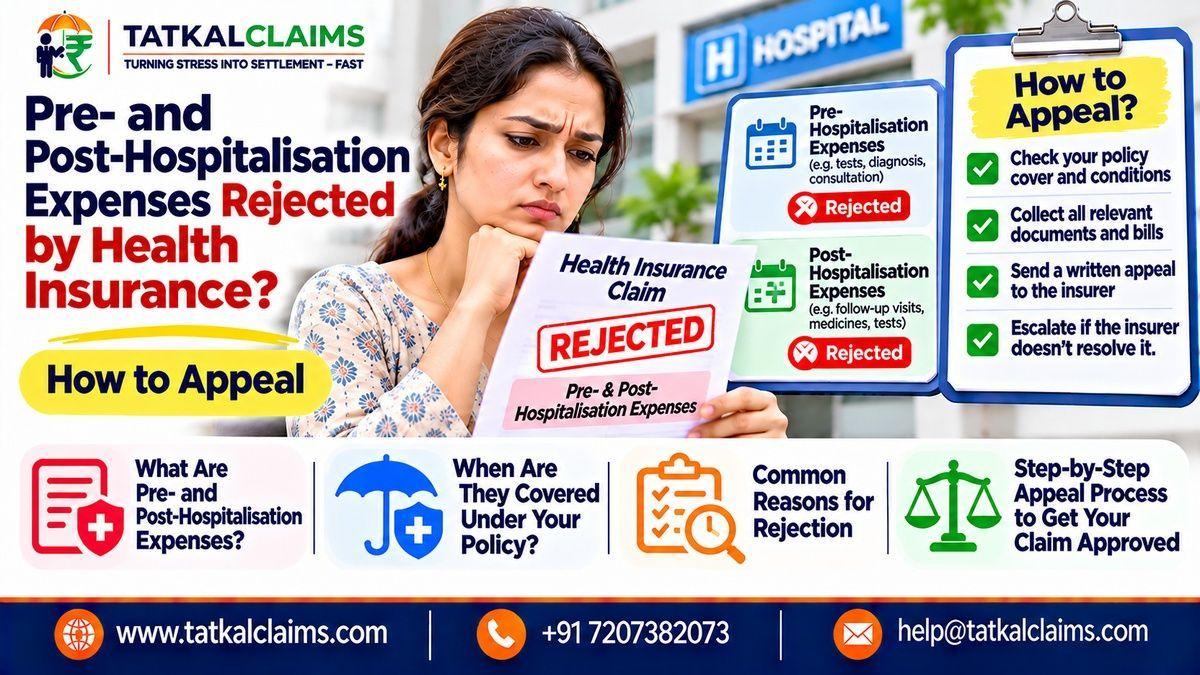
Your insurer paid the hospital for your surgery. You paid separately for the scan that led to admission, the medicines on your discharge prescription and the follow-up visit. When you submit those bills, the insurer calls them outpatient expenses or says it never received them. Start with the main claim reference and check the decision on each bill. A missing bill and a refused bill call for different replies.
What Can Count as a Pre- or Post-Hospitalisation Expense?
Pre-hospitalisation expenses can include a consultation, scan or medicine that relates to a subsequent covered admission. Post-hospitalisation expenses can include prescribed medicines, investigations or consultations during recovery from that admission. Your policy defines the eligible expense types, the time windows and any limits. Physiotherapy, dressings or other follow-up care need to be checked against the applicable benefit and exclusions. For transplant-related bills incurred by the donor rather than the insured recipient, see our organ donor expenses claim guide because a separate donor benefit may have different exclusions.
The HDFC ERGO Easy Health wording reviewed for this guide requires a link to the same condition and an admissible hospitalisation claim. The TATA AIG MediCare example covers eligible consultations, investigations and medicines for up to 60 days before admission and 90 days after discharge, subject to acceptance of a claim under one of the specified benefits. Use your own schedule, wording and endorsements to determine the dates and conditions.
First Check Whether the Insurer Received, Linked or Rejected the Bills
| What you see | What to check | What to ask for |
|---|---|---|
| Hospital payment shows as settled. The extra bills are absent. | Whether the hospital sent only its own invoice and whether you filed the outside bills. | The submission route and a linked claim reference. |
| Extra bills show under a separate claim or as pending. | Whether the claim is linked to the correct admission and whether a query is outstanding. | Acknowledgement, current status and any specific missing item. |
| Insurer marks a bill as OPD or unrelated. | The wording and the clinical record linking that expense to the treated condition. | A bill-by-bill reason and the policy clause used. |
| Insurer says you filed late or incurred the expense too late. | The date of the expense, admission or discharge, and the date of submission. | Which deadline it relied on and how it calculated it. |
| Some bills are paid and others are deducted. | The admissible amount, exclusions, limits and available sum insured stated in the settlement. | An itemised payment and deduction calculation. |
If the admission was cashless, contact the insurer or TPA to confirm how it accepts bills you paid yourself and which reference to use. When a bill already has an acknowledgement, quote that acknowledgement in your follow-up so the insurer can locate the original submission.
If the original hospital claim itself is in dispute following a cashless denial, see the cashless-to-reimbursement guide for the main admission claim.
Count the Expense Window and the Filing Deadline Separately
The expense window answers whether treatment or a purchase falls inside the covered period. Start with the admission date for pre-hospitalisation bills and the discharge date for post-hospitalisation bills, following the wording of the benefit. Check the service or purchase date and keep it alongside the invoice and receipt dates if they differ.
The filing deadline answers when you have to submit the papers. One ACKO Health policy wording, for example, calls for pre- and post-hospitalisation claim documents within 15 days after the post-hospitalisation cover period ends. Your policy may use a different deadline. If you are unsure how to file while still collecting bills, ask the insurer for written instructions and save the acknowledgement for what you submit.
If the insurer uses the word “late,” ask whether it means the expense fell outside the benefit window, the admission was reported late, or the bill was submitted late. IRDAI’s policyholder-protection circular addresses rejection or closure for delayed intimation or want of documents. Show the dated evidence and ask for the specific basis of the decision. The expense must still meet the policy’s coverage terms.
Where the dispute concerns the original notice of an emergency admission, use the guide to late intimation after emergency hospitalisation.
Show How the Scan or Prescription Relates to the Admission
Use the treating doctor’s test order, referral, prescription or discharge instructions. The hospital summary may say why you were admitted, while a scan invoice may show only the type of investigation. Put the two documents together with the report. If the connection is still unclear, ask the treating doctor for a dated clarification identifying the bill or treatment and how it relates to the condition treated in hospital.
For bills from a different pharmacy, lab or clinic, check the provider and documentation requirements in your policy. Keep the patient’s name, service date and payment proof visible. If one invoice contains unrelated items, mark the lines you are claiming and total them separately. That makes it easier for the insurer to review the eligible items.
Worked Example: Which Bills Can You Link to a Cashless Admission?
Suppose a patient is admitted on 10 September and discharged on 13 September after gallbladder surgery. The insurer pays the hospital under the main claim. This example assumes the policy gives 60 days before admission and 90 days after discharge, subject to the accepted claim, covered expense types and available limits.
| Expense | Link to the admission | What to submit or check |
|---|---|---|
| 3 September ultrasound — ₹2,400 | The surgeon ordered it during assessment for the condition treated at admission. | Attach the test order, ultrasound report, paid invoice and discharge summary. |
| 15 September medicines — ₹1,850 | The medicines appear on the hospital’s discharge prescription. | Attach the prescription and itemised pharmacy invoice. Mark any unrelated items. |
| 1 October follow-up — ₹900 | The treating surgeon reviewed recovery after the same operation. | Attach the consultation note, paid receipt and hospital claim reference. |
| 20 September routine eye test — ₹750 | The patient booked it for a separate issue. | Check any separate outpatient benefit before claiming it. |
The first three items total ₹5,150. That is the amount to document under the assumed benefit, subject to the actual policy and claim review. If the insurer paid only the medicines, ask for separate reasons for the ultrasound and the follow-up rather than sending the entire file without identifying the disputed amounts.
What If the Main Hospital Claim Is Pending or Rejected?
Some wordings require an admissible or accepted claim under an eligible main benefit. If the admission is still being assessed, ask whether the linked bills can be lodged now and held for processing. Obtain written confirmation of how the insurer will apply its submission deadline. If the claim was denied and the extra bills depend on that claim, address the hospitalisation denial and request a review of the linked expenses once the decision changes.
Where the main claim was paid, ask for the explanation of benefits for the extra bills and any calculation of remaining cover. A separate benefit limit, an exclusion or exhausted sum insured can affect the amount even when the admission was accepted.
If the insurer has already issued a part-payment decision, use the short-settlement guide to reconcile the deduction with the policy.
Put the Appeal in Writing
- List each disputed invoice with its date, amount, provider and the reason given. Mark whether it is missing, pending, reduced or rejected.
- Attach the policy benefit, admission and discharge dates, and the hospital claim number. Add the linked claim number and upload acknowledgement if you have them.
- For each bill, attach the relevant prescription, advice or report and proof of payment. Give the insurer a short explanation of the link to hospital treatment.
- Send the request to the insurer’s claims team or Grievance Redressal Officer. Keep its acknowledgement and ask for a written decision on each line.
Subject: Reconsideration of pre- and post-hospitalisation expenses for claim [number]
The main hospital claim for admission on [date] and discharge on [date] was [settled or current status]. I submitted the separately paid bills under [reference] on [date]. Please confirm which invoices are linked to the admission and review the attached bill schedule, prescriptions and payment receipts.
For each unpaid or reduced item, please provide the amount considered, the exact reason and the applicable policy clause. If your decision relies on dates, please identify the expense window or filing deadline used and show how it was calculated. If a specific document is needed, please identify it so I can respond.
Escalate a Bill That the Insurer Still Rejects
IRDAI’s health insurance master circular requires insurers to give details and cite the specific policy terms when a claim is repudiated or partly disallowed. If the insurer’s grievance response is unsatisfactory or the matter remains unresolved within the applicable period, use Bima Bharosa to lodge or track the grievance. An eligible dispute can also go to the Insurance Ombudsman after the insurer-first step, subject to the response period, filing deadline and other eligibility rules.
For the two routes and their requirements, see the Bima Bharosa and Insurance Ombudsman comparison.
How Tatkal Claims Can Help
Tatkal Claims can compare the unpaid bills with your hospital claim and policy wording, check the insurer’s calculation and help prepare a focused appeal where the documents support it. Share the settlement letter, policy wording and disputed invoices so each item can be reviewed against the reason given.
Frequently asked questions
Can I claim follow-up medicines after a cashless hospitalisation?
Check your post-hospitalisation benefit. Where it covers the prescribed medicines for the condition treated, attach the discharge prescription and paid invoices and file them using the insurer’s linked claim process.
Does everyone get 60 days before admission and 90 days after discharge?
Use your own benefit wording. Some products specify those periods, and others use different windows. Check the filing deadline separately.
Can tests done at a different lab before admission be covered?
They may be eligible if the wording allows the expense and the test was within the covered period and related to the condition that led to an eligible hospital claim. Submit the test order, report and paid invoice.
Can I claim follow-up physiotherapy?
Check whether the applicable benefit covers this expense and whether any exclusion, limit or provider condition applies. Keep the doctor’s recommendation and dated, itemised invoices.
What if the hospitalisation claim is still pending?
Ask whether you can register the linked expenses now and when the insurer needs the bills. Some plans process them only after the eligible hospitalisation claim is admitted.
What if a pharmacy invoice includes medicines for a different illness?
Identify the medicines prescribed for the condition covered by the admission and show those amounts separately. Check whether any other benefit applies to the remaining items.
Can I appeal if the insurer said my bills were submitted late?
Ask for the deadline and calculation in writing, provide the submission acknowledgement or explanation for delay, and distinguish the filing date from the date the expense was incurred.
Sources & Methodology
This guide compares specific insurer policy examples with IRDAI’s claim communication and policyholder-protection circulars. The amounts and dates in the worked example are illustrative. Check the wording and endorsements issued for your policy. This guide gives general information and payment depends on your policy and claim evidence.